

We know this thanks to a group of volunteers who have been counting butterflies over a 30-week period each year for the past ten years, led by Karen Goldie-Morrison, former Chair and Trustee of Butterfly Conservation. We asked her to write about butterfly surveying for our April Friends’ newsletter, at the start of the survey season.
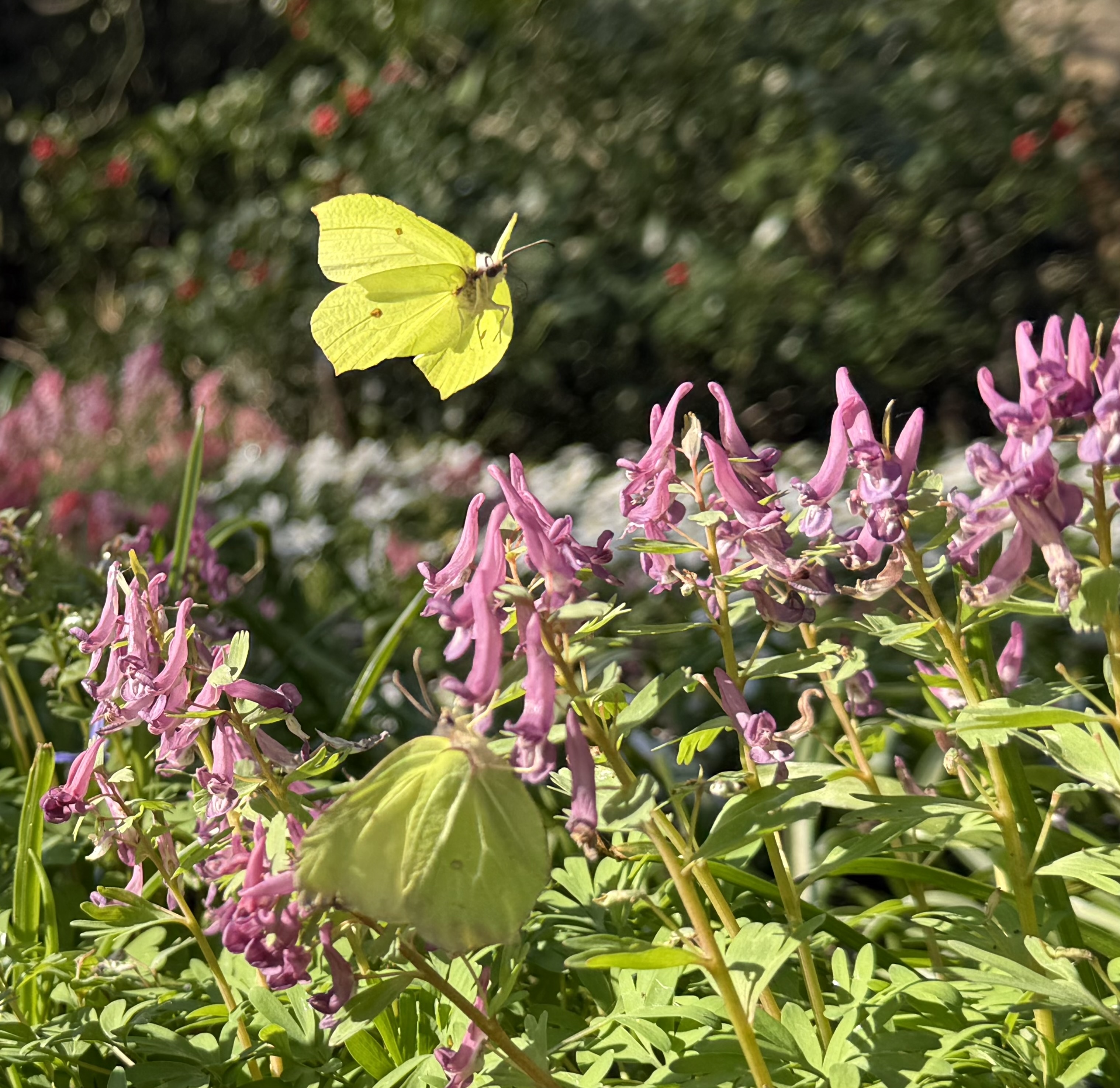
Have you seen any butterflies yet this year? Hot sunshine during the winter months will bring out Commas and Peacocks which overwinter as adults. But the herald of spring is the butter-coloured Brimstone, another that survives winter as an adult. (This is the male, the topmost butterfly in the image above. The female is a delicate lime green.)
April is the start of the formal recording year. We walk over the Common itself, around the Leg O’ Mutton, in the Orchard, variously through acid grassland, flower meadows, woodland trees and rides, alongside hedgerows, over newly recovered land and through allotments. We even scan the tops of Oak trees. Active management by the Barnes Common conservation team is critical in maintaining the wealth of habitats which attract and support our 30 species.
As I begin on my walk, I experience a frisson of excitement – what might I see?
– a butterfly carpet of Purple Hairstreaks covering the ground – normally denizens of tall oak trees but in the dry summer of 2018 they had flown down to the ground to drink fresh dew.
– in 2025 Green Hairstreaks over many areas on the Common – these little gems are normally seen in just ones and twos each year.
– the delight of a cluster of Small Coppers on a stand of ragwort or a handful of Small Heaths dancing together in the short grass.
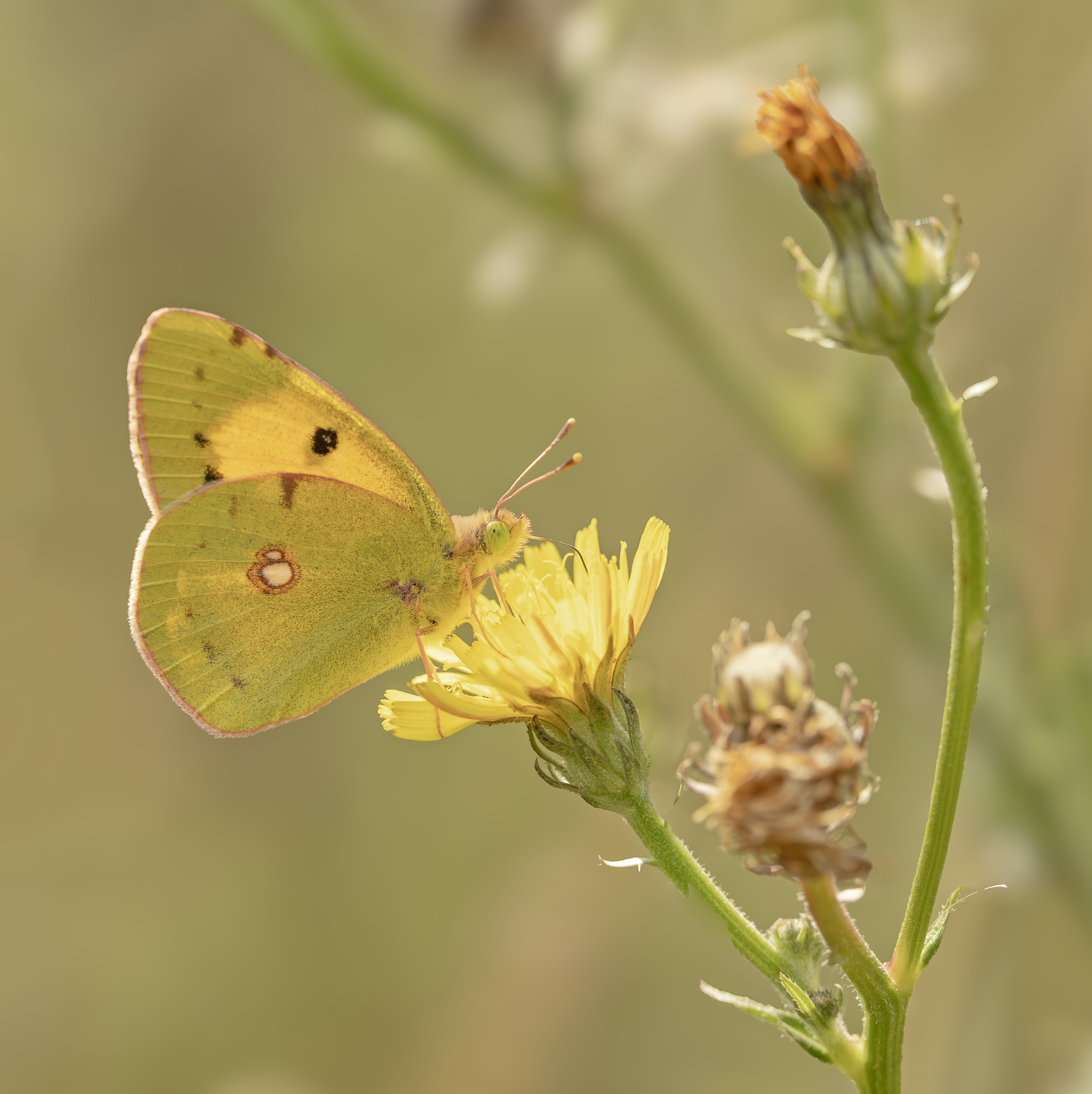
In some years a new species for Barnes turns up. Brown Argus butterflies were first seen in 2018 basking in the meadow by Rocks Lane, in 2022, a Dark Green Fritillary was flitting at great speed through the Orchard, while last year our first Brown Hairstreak was lurking in the brambles by the cricket pitch. Always ready to record that special sighting, late October last year, our local photographer and publisher Andrew Wilson captured on camera one of our rarer visitors, the Clouded Yellow (pictured below).
Butterflies are now recognised as environmental indicators, sensitive to fine-scale changes – most are not widely dispersed, have specific foodplants and rely closely on the weather and climate. Monitoring our Barnes butterflies provides an important gauge of the quality of our natural environment.
What deductions can we make from our ten years of recording on Barnes Common? The tally is 6628 individual butterflies. The numbers and species recorded each year vary significantly. Experience tells us that the highest butterfly numbers are recorded when there is sunshine rather than the hazy heat of late summer. 2018 was a hot summer and we counted 1165, 2021 was a cooler one and the number was 432. But even in the hot sunny summer last year we recorded only 575 on the Common.
With temperatures rising, butterfly seasons have steadily shifted two to three weeks earlier over recent years. The increasingly hot summers without rain mean that the foodplants dry up. What then for the late-season caterpillars and next year’s adults? We’ll start to get an idea this April when we begin our walks again.
If you are interested in joining our Barnes group of butterfly transect walkers, please get in touch. We all like a summer break or three, and having a team means we can cover for each other through the summer so that we don’t miss a week’s recording.
Published on 30 March 2026