

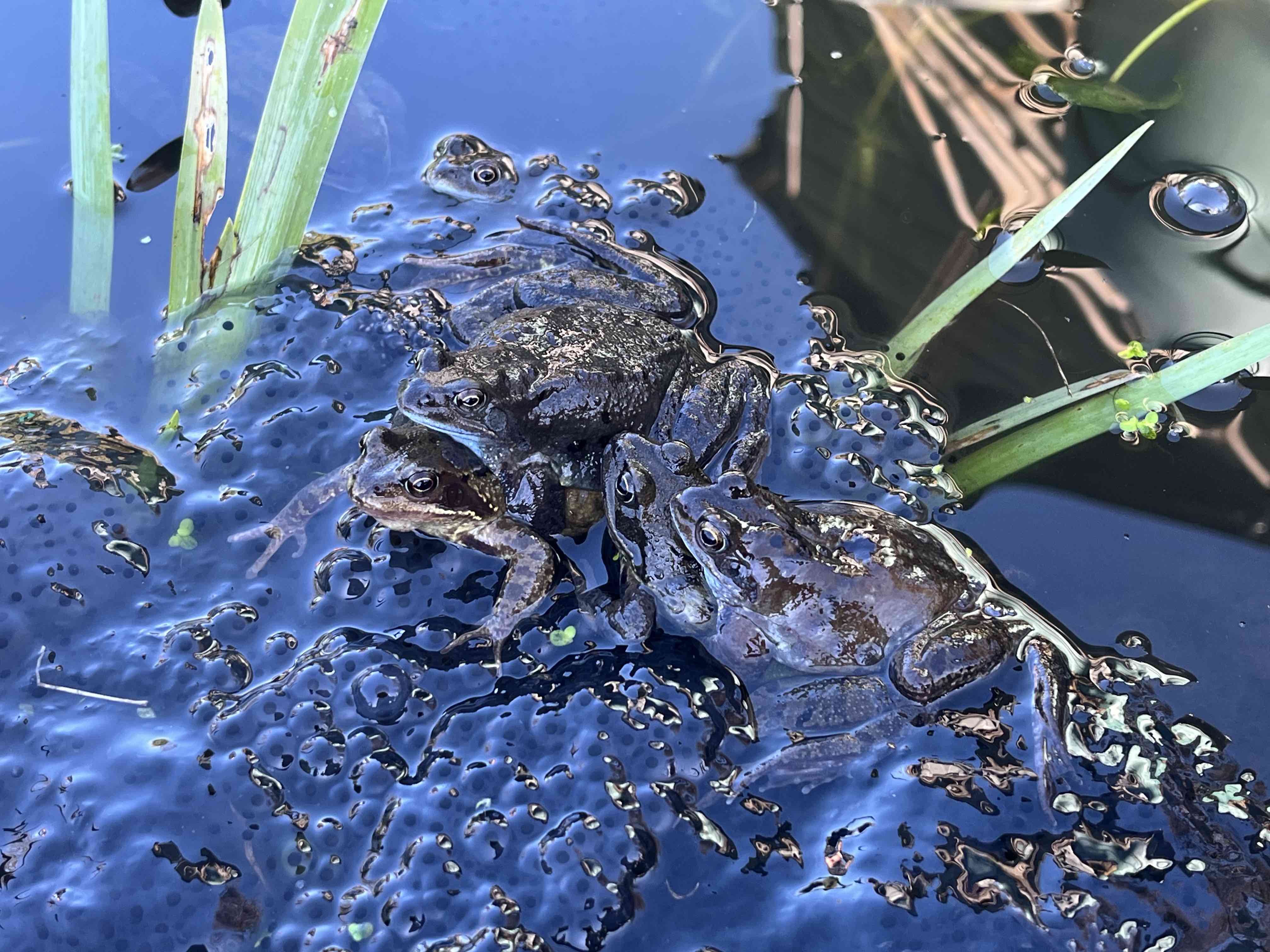
In London, you’re most likely to come across Common Toads (Bufo bufo) and Common Frogs (Rana temporaria) or Marsh Frogs (Pelophylax ridibundus). We do have Natterjack Toads and Pool Frogs in the UK, but both are very rare. With the weather getting warmer, toads and frogs are now waking from their winter hibernation.
Toads have warty, dry skin and lay their eggs (called spawn) in long strings in the water. Frogs have smooth, moist skin and lay their spawn in large clumps. Frogs have longer legs than toads, and tend to hop around, while toads crawl on their shorter legs. Common Toads are brown in colour, with copper-coloured eyes, while Common Frogs vary in colour from pale to dark brown and green.
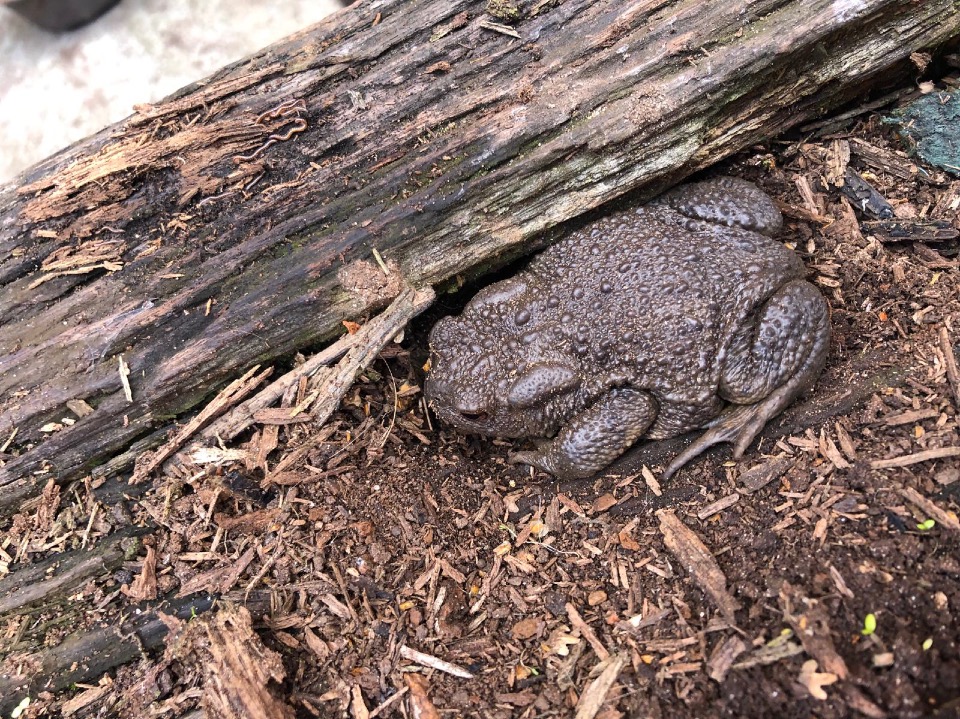
Toads and frogs live and feed in woodland, and grassland areas, as well as gardens, returning to the water to breed. An exception to this is the non-native Marsh Frog that tends to spend its whole life in or near the water. From the shell-less eggs known as spawn, tadpoles hatch and grow front, then back legs. Once their tail disappears, they are ready to leave the water.
Marsh Frogs are larger than the native Common Frog, and are green in colour, ranging from olive to bright green. While Common Frogs have a dark ‘mask’ behind the eye, Marsh Frogs don’t. Marsh Frogs lay their eggs in small clumps under the water, attached to plants. The males croak loudly in the spring and summer.
Toads and frogs are important predators of a variety of invertebrates. Toads are known as the gardeners’ friends, as slugs and snails form a large part of their diet. In turn, frogs and tadpoles are eaten by herons, egrets and grass snakes. Toads and frogs spend the winter hibernating; toads hide under log piles or stones, Marsh Frogs hibernate in pond mud, while Common Frogs can both be found hibernating under log piles and in pond mud.
Have you seen any frogs, toads or newts in your garden or allotment? Please let us know via this link which is live until the end of May.