

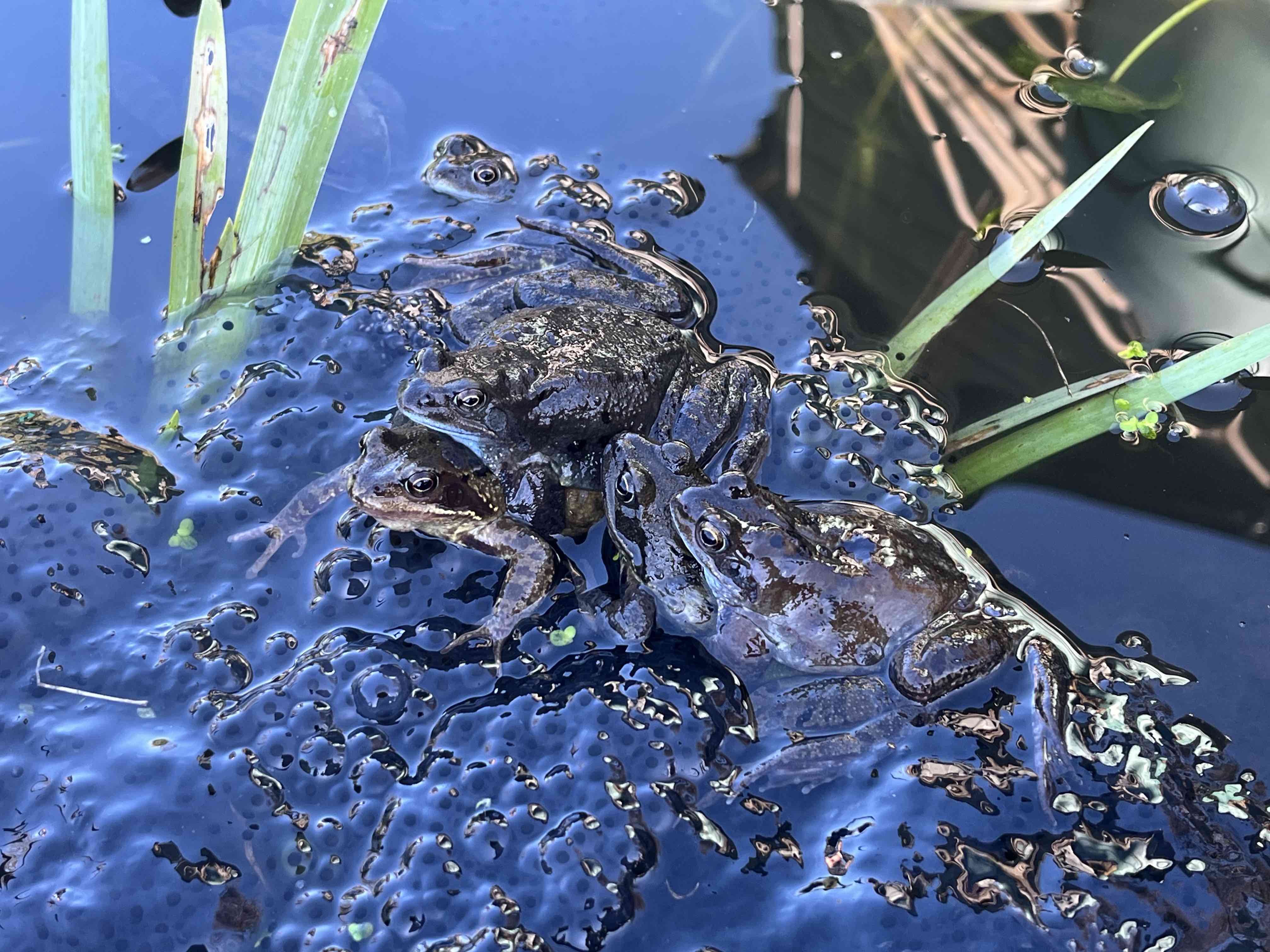
Frogs, Toads and Newts are interesting animals to study in urban areas because they live both on land and in water during their lifetime. This means they are useful indicators of how good the ponds and green habitats are in our local parks and nature reserves, and how well these are connected.
Frogs, Toads and Newts are the most threatened group of vertebrates in the world and their numbers continue to decline due to habitat loss, disease, climate, pollution and invasive species. These threats are all present in urban environments, making it a challenging place for them to live.
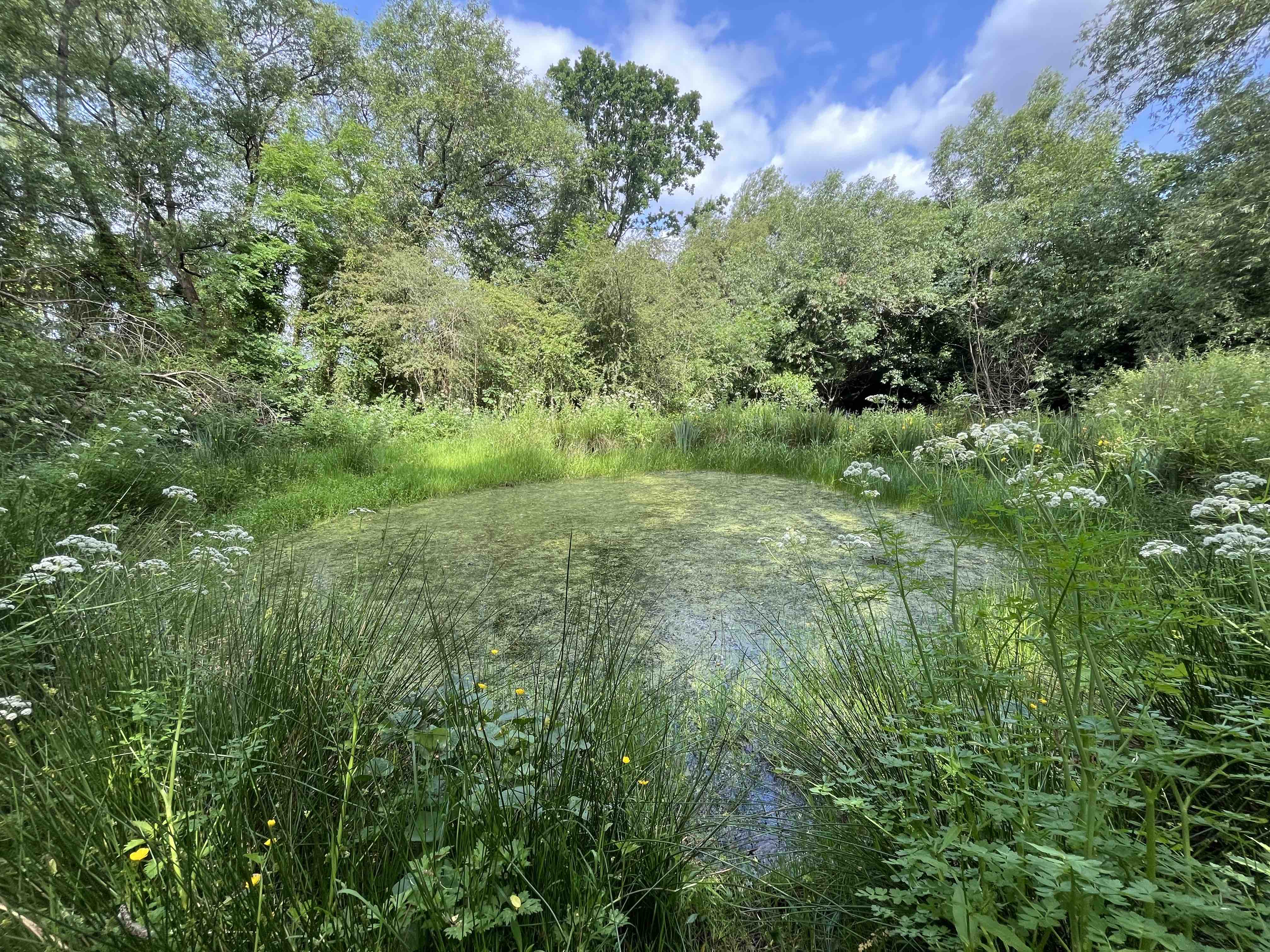
Woodland pond on Barnes Common
To understand how Frogs, Toads and Newts are faring in our local urban green spaces, in Spring 2025, we carried out a comprehensive survey across Barnes and East Sheen. As part of this project with The University of Oxford, 49 urban ponds across ten sites in parks, nature reserves and allotment sites were surveyed. The aim was to find out which ponds Frogs, Toads and Newts were choosing to live and breed in.
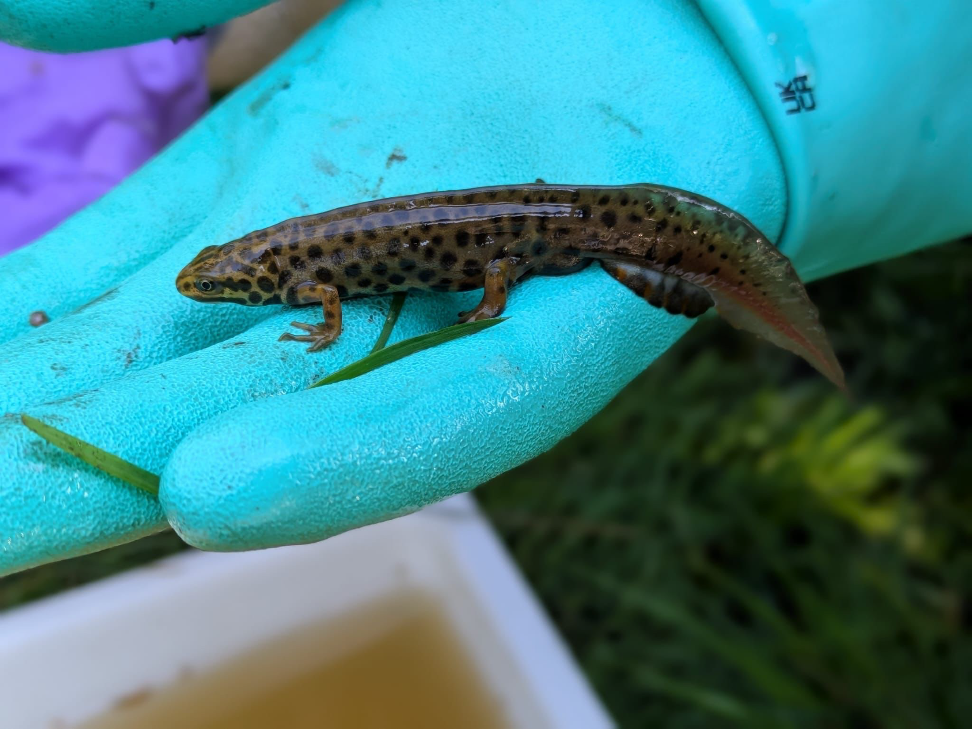
Smooth Newt found when surveying ponds in East Sheen
Over 4500 measurements were taken as part of this project to understand the differences in water quality and the condition of the habitat surrounding these ponds. The results showed that there were several factors that affect which ponds Frogs, Toads and Newts choose to live and breed in. The most important factors were that ponds need a good surrounding habitat, for example long grass, log piles and other dark and damp places they can hide. Ponds also needed to have clean water, which is free from pollution, and contain a variety of pond plants. Limiting the disturbance from dogs was also key, along with a variety of different pond shapes and sizes.
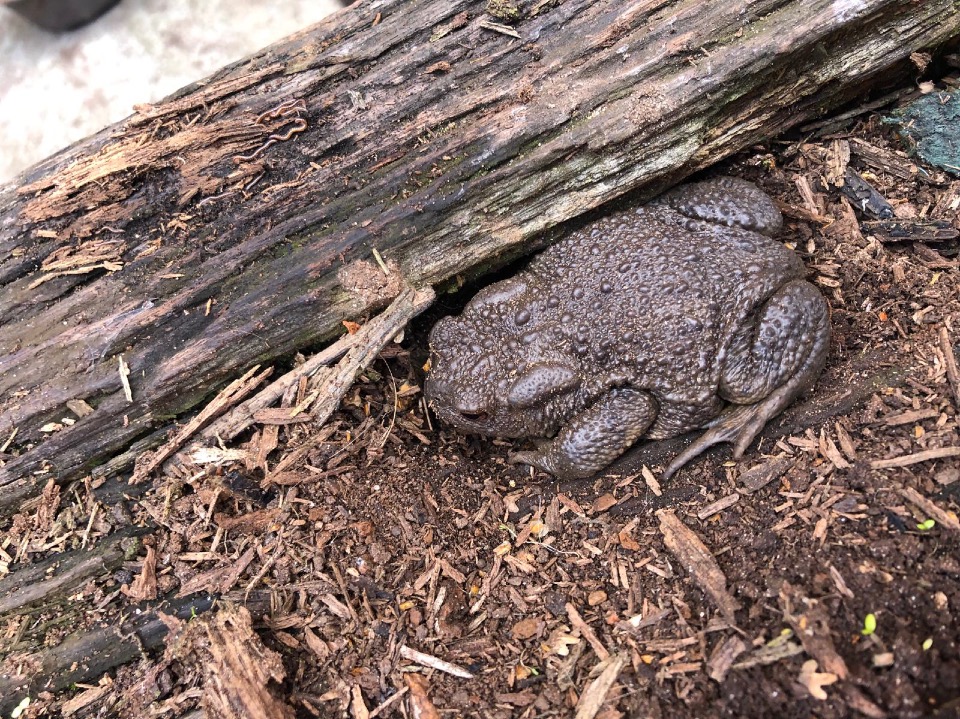
Common Toad living in a wood pile
Ponds also mustn’t dry out too soon before tadpoles and larvae have had the chance to change into young Frogs, Toads or Newts and leave the pond. Of the 49 public ponds surveyed, only 39% had Frogs, Toads or Newts breeding in them. Although Smooth Newts were recorded at most sites, Common Frogs were limited in the number of ponds they could breed in because half of all ponds surveyed had polluted water. Common Toads were only found breeding in two public ponds across the whole of Barnes and East Sheen, which means they could be lost from our local area completely.
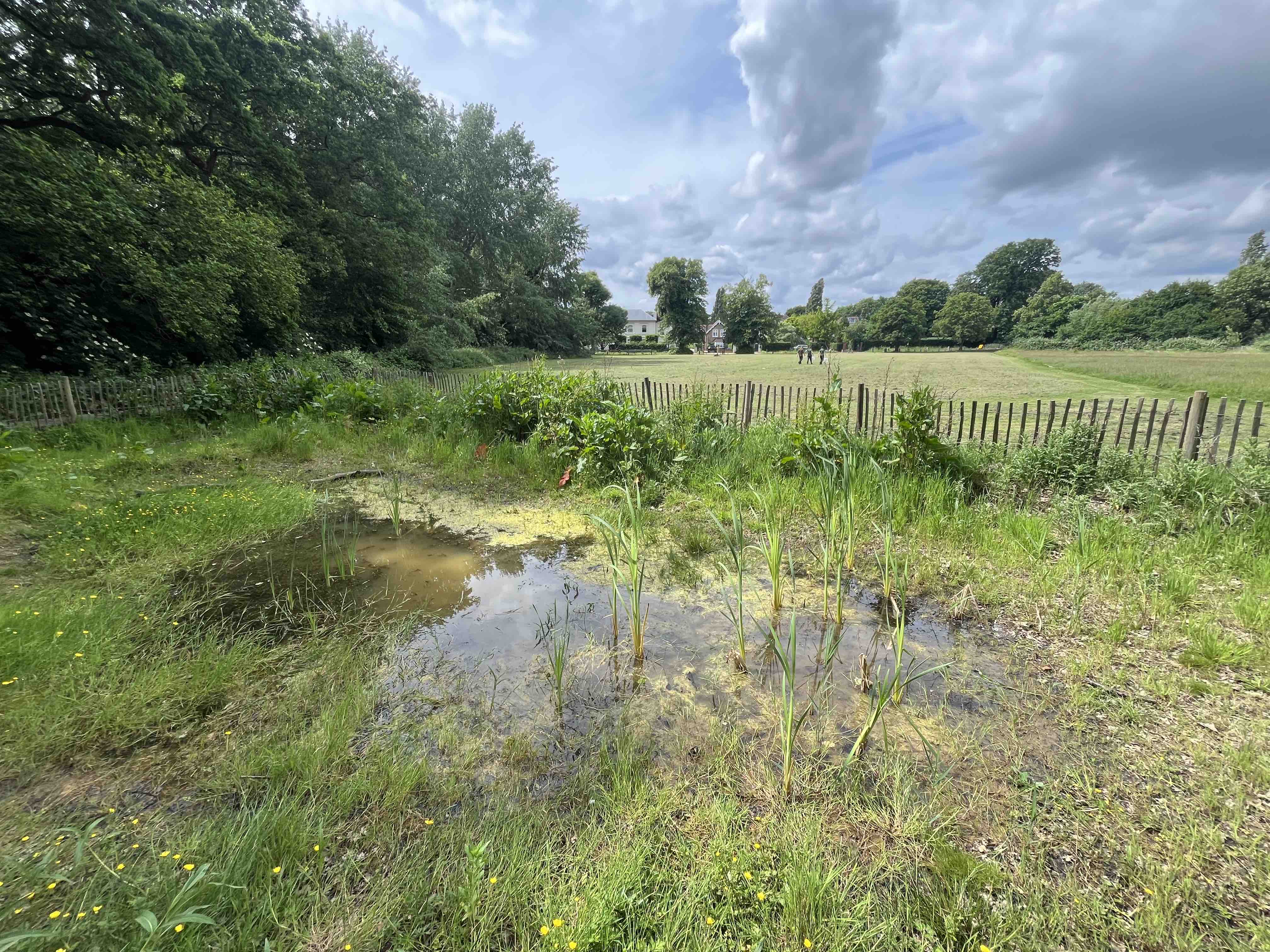
Clean water pond on Barnes Common
Using this research, we want to restore existing ponds to increase the number with clean water for Common Frogs and build new ponds to provide more breeding opportunities for the Common Toad. This will also ensure our ponds are better connected across the Richmond Borough.
An example pond where we have redirected the source of the water pollution is at Palewell Common and Fields. As part of this study, high levels of pollution were recorded in a spring feeding the woodland pond. This was having a major impact on the pond, with no animals able to survive living in the water. Conservation works in August 2025, carried out by Barnes Conservation, to dig a new channel and redirect the polluted spring were successful and the pond is now free of pollution. Only a few weeks later at the end of September, water beetles and aquatic plants were recorded in the pond for the first time.
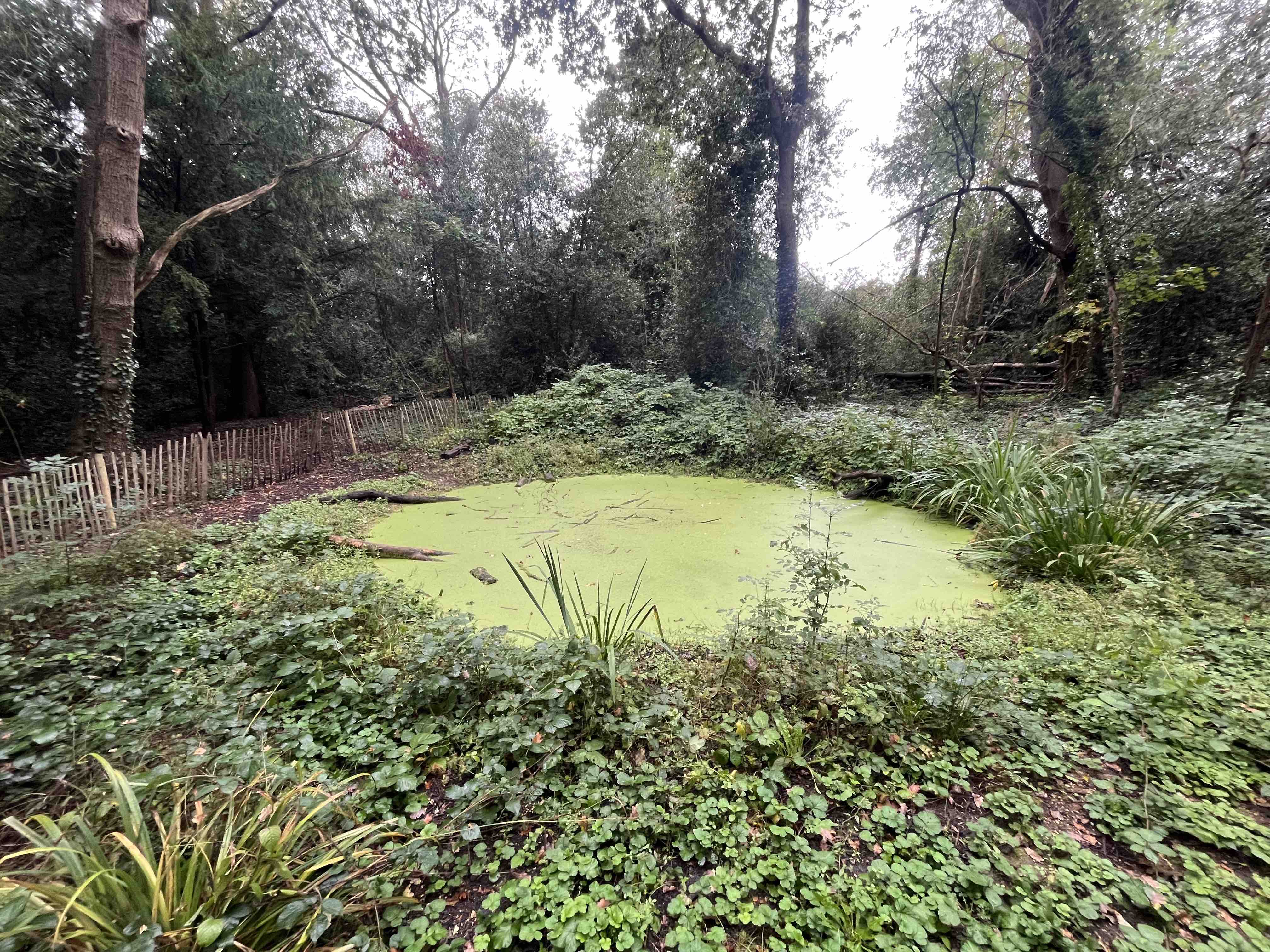
Polluted woodland pond in Palewell Common and Fields before restoration works
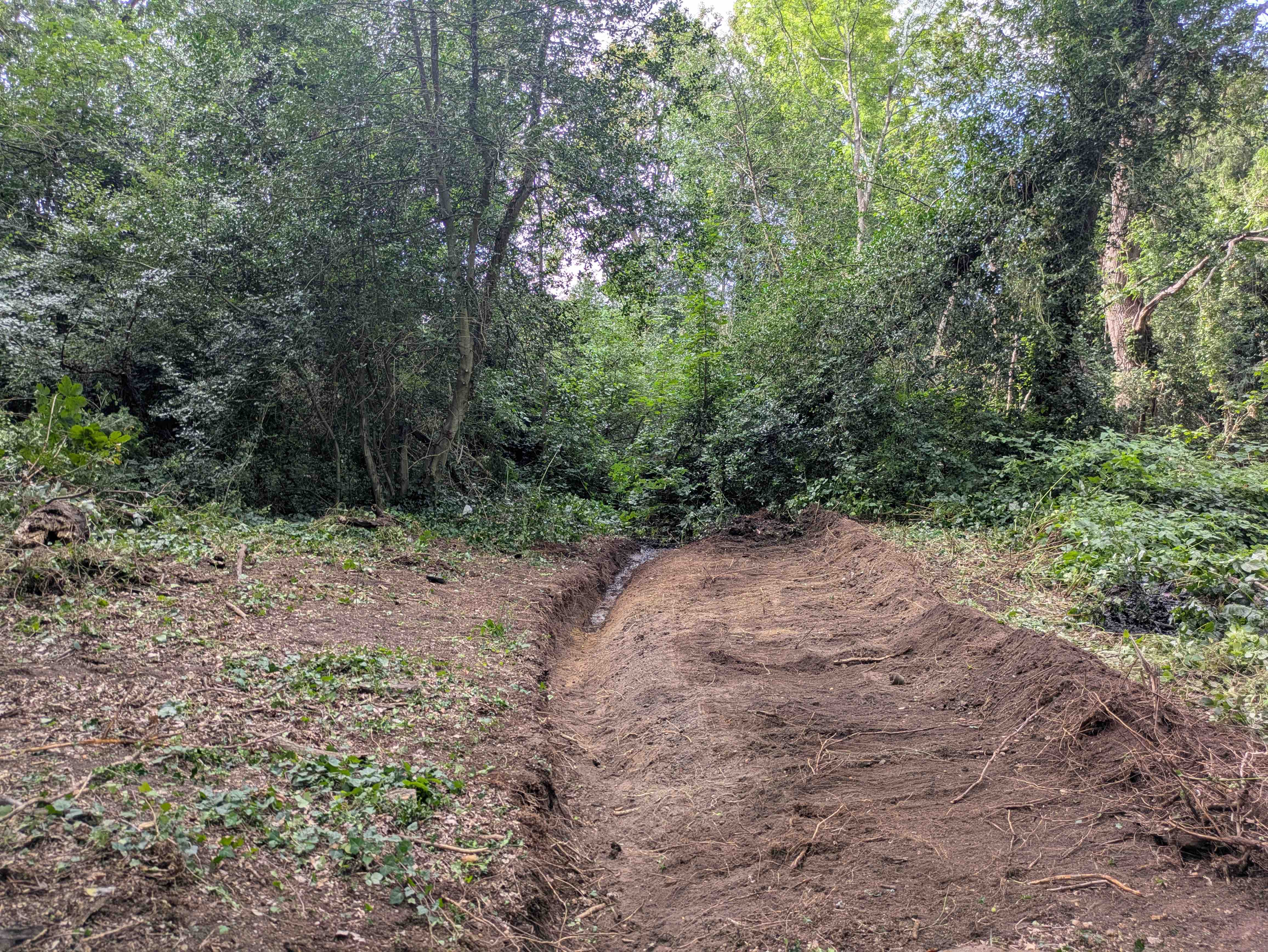
New channel redirecting polluted spring away from woodland pond in Palewell Common and Fields
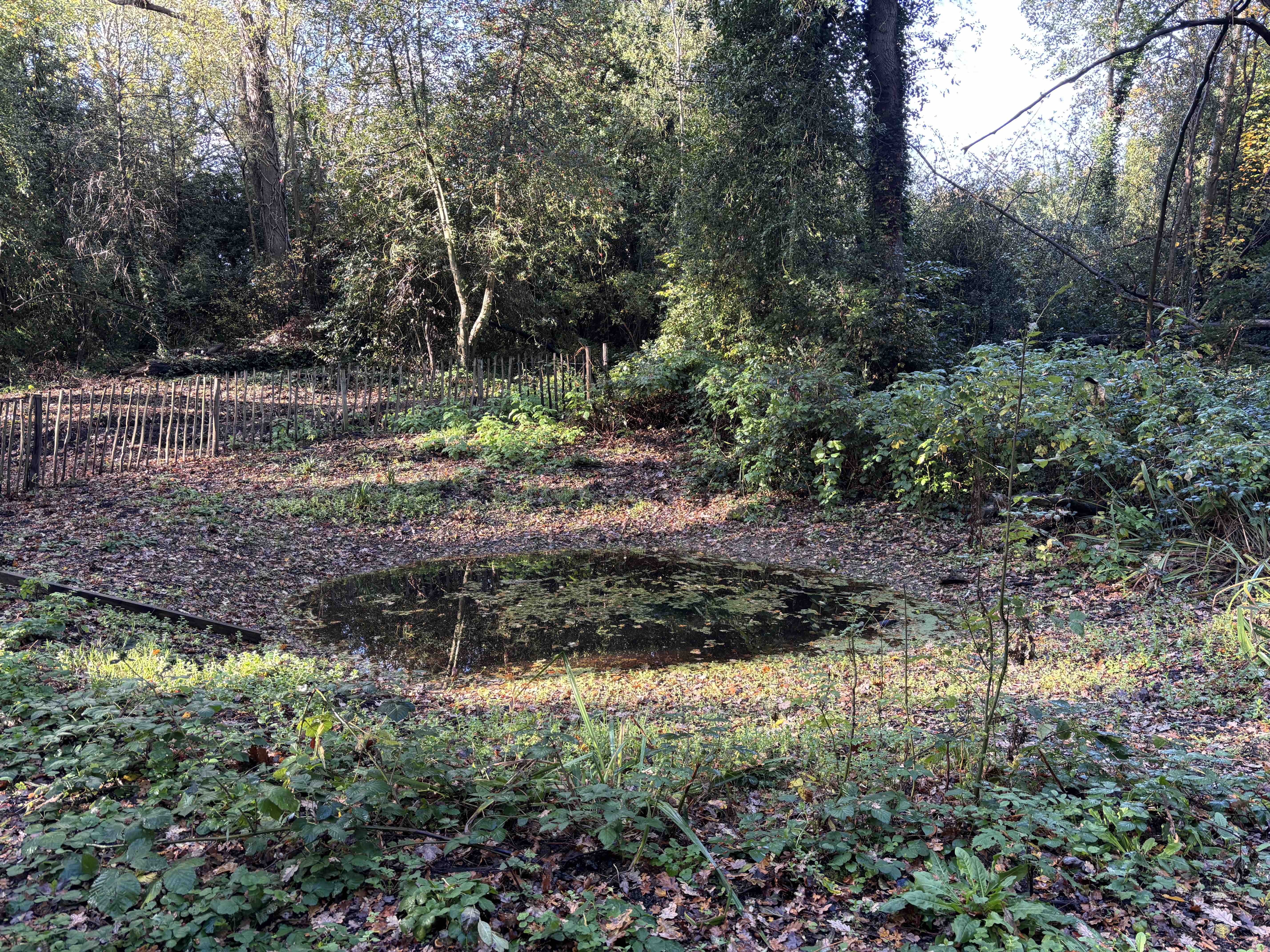
Restored woodland pond in Palewell Common and Fields with water beetles and aquatic plants recorded for the first time
We need your help with the next stage of this project to map all garden ponds in Richmond Borough to find out where Frogs, Toads and Newts are successfully living and breeding. This will help us to prioritise which ponds in parks and nature reserves should be restored and where to build new ponds. This will create much needed good quality habitat for these animals to live and breed in.
The following questionnaire only takes a couple of minutes to complete and will help to support this important conservation work in our local area:
https://forms.office.com/e/RHKuYfmitg?origin=lprLink
Thanks in advance for your help. If you have any questions, please email [email protected]
The survey will run until the end of the amphibian breeding season and close on 31st May 2026.
Header photo: Common Frogs breeding in an allotment pond