

Barnes Common frequently receives enquires from people who want to make their gardens more sustainable, and here, we respond to some of these queries. If you have a question you would like us to feature – whether related to food growing or sustainable gardening in general – please contact Nicky. If you have tried these ideas at home, let us know how it goes!
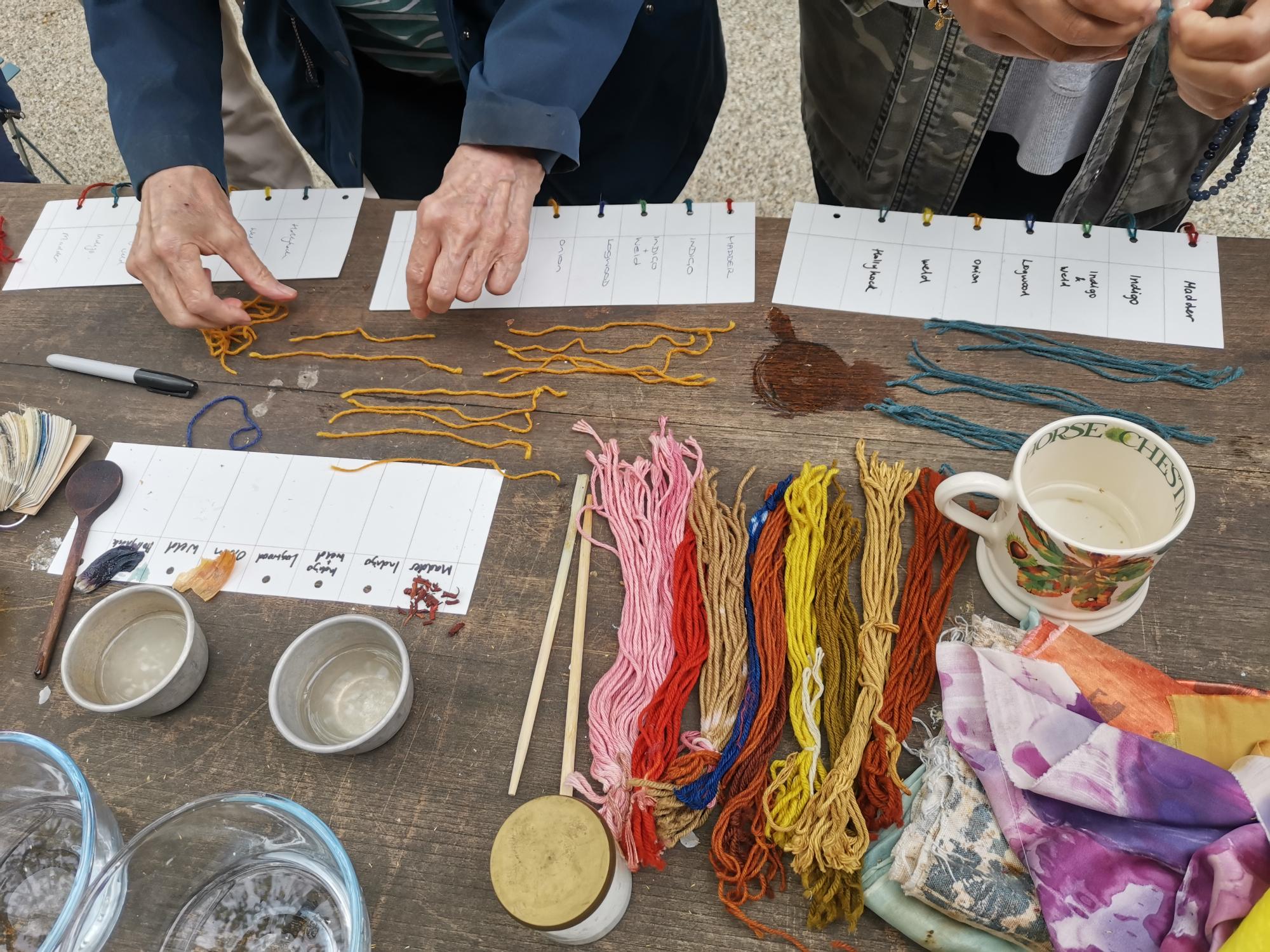
In September last year, a new garden opened on the roof of the National Theatre on the Southbank. Rather than food crops or flowers for wildlife, the gardeners grew plants that could be used for dyeing the costumes used in the theatre. Increasing awareness of the environmental impact of our clothes has led many people to seek alternatives, and natural dyeing, whilst still a minute part of the global textile market, has become increasingly popular. In fact, it was only 144 years ago that the first synthetic chemical dye was discovered and we stopped using the natural dyes that had been commonplace. So, is this something you can do at home? Whilst dyeing does require some equipment and knowledge of the process, cultivating some plants for dye is certainly achievable. In fact, once you start finding out more about plants for dyeing, you might be surprised at how many you already grow. So, if you’re feeling inspired to start a dye border, here’s our top 5 plants to try…
- Marigolds
You may already be growing marigolds. Their cheerful blooms attract pollinators and repel pests, so they’re a particular favourite in veg gardens. The blooms are not only great for insects; they also produce vibrant orange and yellow dyes. Easy to grow from seed and flowering throughout the season, they’re a great plant to try – just make sure you protect them from slugs when they’re young.
- Beetroot
We’ve all stained our hands cutting up a beetroot – so it stands to reason they’d also be a great dye. In natural dyeing, a mineral substance called a mordant is used to bind the dye to the fabric, and the red juice of beetroot can be made more vibrant or softer depending on the mordant used.
- Madder
The unremarkable leaves of madder hide a secret below ground – long roots that produce red and pink dyes. Madder is a perennial and can be grown in a border or a deep pot. It will take a couple of years before you can harvest the roots, but this plant is a staple of many dyers.
- Nettles
You may well be growing nettles whether you intend to or not, but the good news is they can be put to good use! The leaves produce a light green dye, which gets darker the longer you leave the nettles in the dye pot.
- Buddleja
Buddleja is everywhere in London – in gardens, on railway verges and in pavement cracks and crevices. As well as being cheerful and wildlife friendly, the flowerheads can be used as a natural dye. Interestingly, whether you use the purple, white or yellow variety, the plant yields a strong yellow dye. As buddleja are such a favourite with pollinators, it’s a good idea to pick any flowers as they start to fade, to avoid disrupting food supplies.
Have you grown or used any natural dyes? We’d love to know more about your experience. Contact Nicky to tell us more!