

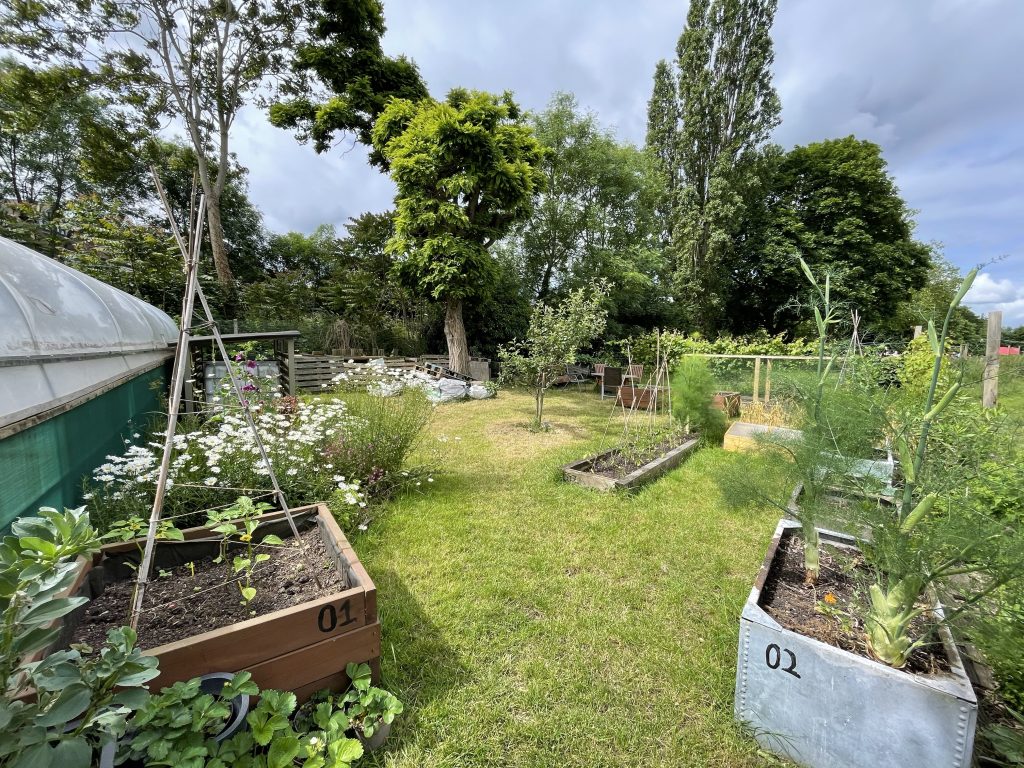
Our Community Growing Project often receive enquiries about lawns – whether about the impact of plastic grass on the environment, what to do to make a lawn more climate-resilient or how to create a wildflower meadow. These queries might be summed up with the over-arching question, “what should I do with my lawn?”.
Although a lawn can be a great place to sit outside in the summer, it can also be high-maintenance and resource-intensive. On top of this, a swathe of grass is not necessarily particularly environmentally beneficial. However, there are some simple things you can do to make your lawn more wildlife-friendly and climate resilient.
In recent years, there has been a trend towards replacing lawns with plastic grass. Many people prefer this because it negates the need for regular mowing and it doesn’t turn brown in the summer. However, if you are thinking about plastic grass, it’s worth considering its environmental impact. Plastic grass does not support any living creatures, and removes habitat for important members of the ecosystem such as earthworms – vital food for hedgehogs and birds. It also gets extremely hot during sunny spells, and contributes to global warming. In addition, it sheds microplastics into the surrounding environment. If you do already have a plastic lawn, there are some things you can do to help off-set these effects. Ensure there are some planted areas in your garden if possible. If you don’t have any ground you can plant directly into, then consider adding some containers with plants that will attract pollinators throughout the season.
If what you’re looking for is a lower maintenance lawn, there are other alternatives to grass. A popular choice is clover – it’s great for pollinators, and because it’s deep-rooted, it will stay green in dry weather. Clover can tolerate foot traffic, and a mow once a year (or a trim with shears) is enough. Yarrow is another great grass alternative, as are creeping thyme and sedums. In order to add these species to an existing lawn, cut the grass very short in spring and scarify the area, before over-seeding with these species. You may need to repeat this a few times if the grass is particularly vigorous.
An even more environmentally beneficial approach is to grow a wildflower meadow. No Mow May has become increasingly popular in recent years, and the idea of giving over part of the lawn to wildflowers has gained traction. Creating a wildflower meadow does take some time and effort, and it will take several seasons to establish one. However, given that traditional wildflower meadows in the UK have declined by more than 97% since the 1930s, it is definitely a worthwhile endeavour. You don’t necessarily have to turn your whole lawn over to meadow, as even creating a small patch is beneficial.
If you wish to create a meadow, then there are a few steps to take. Simply scattering wildflower seeds on to the grass will not work, as the grass will out-compete the seeds. You can decide to just stop mowing – it may be that there are wildflowers in the lawn already, but they don’t have a chance to thrive due to a regular mowing schedule. However, if you do wish to add greater diversity, then it is best to grow on seedlings until they are a reasonable size, and plant them out. Remove sections of grass where you’re planting so that they have a chance to establish. You might use annual or perennial wildflowers; annuals will self-seed, but will often need to be ‘topped up’ in spring. It will take several years for the meadow area to develop and diversify, but seeing how it develops is part of the fun! Meadows support loads of different pollinators, as well as invertebrates such as beetles, and larger animals such as frogs and hedgehogs. The Wildlife Trust has a list of suggested wildflowers to include.
Finally, a very easy, ‘do nothing’ approach can also work; simply mow less. Although the aesthetic of a manicured lawn remains popular, it is worth considering where this aesthetic comes from – this interesting article explores the colonial roots of a neatly kept lawn. Mowing less will create greater diversity, and more habitat for wildlife. It also saves you time and effort! What’s not to like?
Barnes Common frequently receives enquires from people who want to make their gardens more sustainable, and in this series, we respond to some of these queries. If you have a question you would like us to feature – whether related to food growing or sustainable gardening in general – please contact Nicky. If you have tried these ideas at home, let us know how it goes!
Previous blogs: