

As we are anticipating the third heatwave of this summer later this week, climate change is again an issue on everyone’s mind, writes our Communications Officer, Bori Kiss. While we can’t say it with certainty that a particular weather event was caused by climate change, it is a fact that climate change is causing more extreme weather patterns, such as heatwaves and storms. Heatwaves, like that of summer 2018, are now 30 times more likely to happen due to climate change, according to the Met Office. In London this means hotter and dryer summers, and warmer and wetter winters, with the heaviest rains becoming more intense.
We are already feeling the effects of the warming climate with this spring being the driest spring since records began in 1893. We have a medium risk of summer drought according to the Environment Agency, and our green spaces are already looking like they usually do towards the end of August, with grasses dry and leaves hanging limply from trees.
The recent rainfall was very welcome but nowhere near enough; our plants are still thirsty. Our Conservation team have been busy watering the young trees and recently planted hedges on the Common. Trees and hedges need regular summer watering in the first 3 years after planting, until their roots are established enough to better survive short periods of drought.
Trees and wildlife are suffering from the dry weather everywhere in London: street trees and the animals that depend on them are especially feeling the heat stress. It’s very simple to help them: give your young street trees 50 litres of water every week, and help their odds of survival in the harsh urban environment. Even a single tree can sustain a whole range of insects, from moths and butterflies to aphids and beetles, in turn providing food to local and migrant birds.
It’s not all doom and gloom: the good news is that we can help our local ecosystems become more climate resilient by improving biodiversity – this means restoring and conserving habitats on the Common. But it can also mean creating new micro habitats in local gardens.
Hedges are especially useful as safe corridors for wildlife, providing food and habitat in addition to shade. Leaving part of your lawn to grow long, or the bottom of the hedge untidy, helps small animals find a cool hiding place in the heat. If you have a garden, planting shrubs and trees can provide shade (both for you and wildlife). You can also help birds, hedgehogs and other animals by leaving a bowl of water out for them. Place some pebbles in the water for a safe access point for insects like bees. And creating a garden pond, even if it’s just a large pot with some native aquatic plants, is probably the simplest way to instantly improve your garden’s biodiversity.
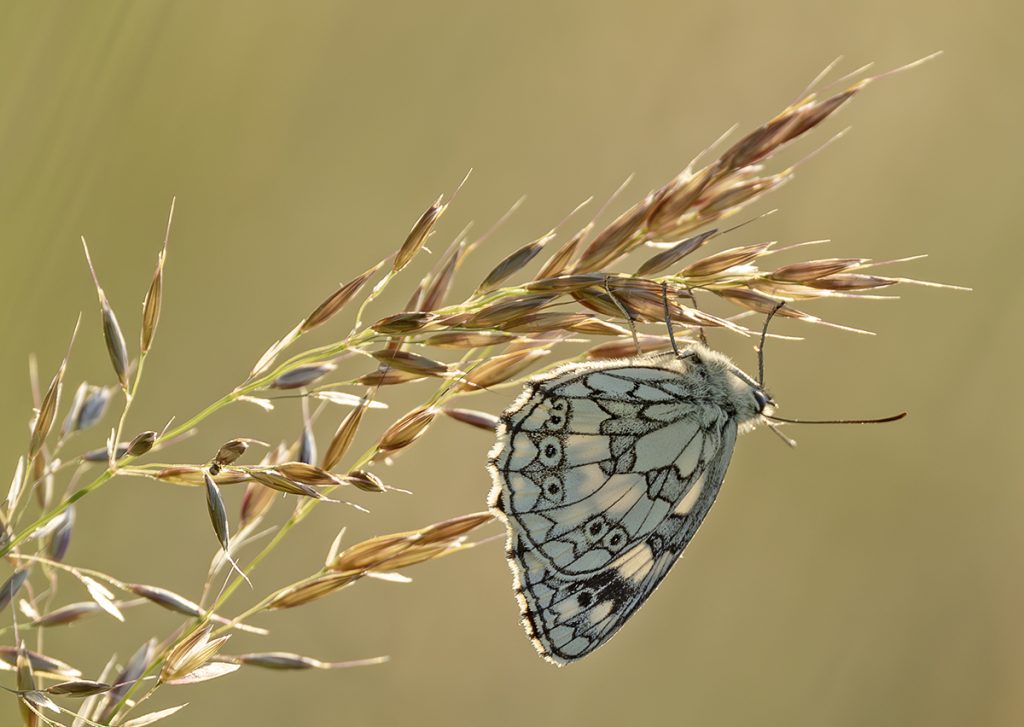
Photo of Marbled White in the Orchard by Andrew Wilson.
Published on: 8 July 2025