

Fungi are an incredibly varied group, and not all of them have the traditional mushroom shape with a cap, gills and stem that most people tend to think of whenever fungi are mentioned, writes our Communications Officer, Bori Kiss. Most of the fungi you can spot on the Common will have fruiting bodies formed of hyphae (fungal filaments) that can form a huge variety of shapes: there are cup shaped fungi, shelf-like brackets, jelly-like, spherical, trumpet-shaped, as well as crusts and fuzzy moulds, and more.
Giant Polypore (Meripilus giganteus)
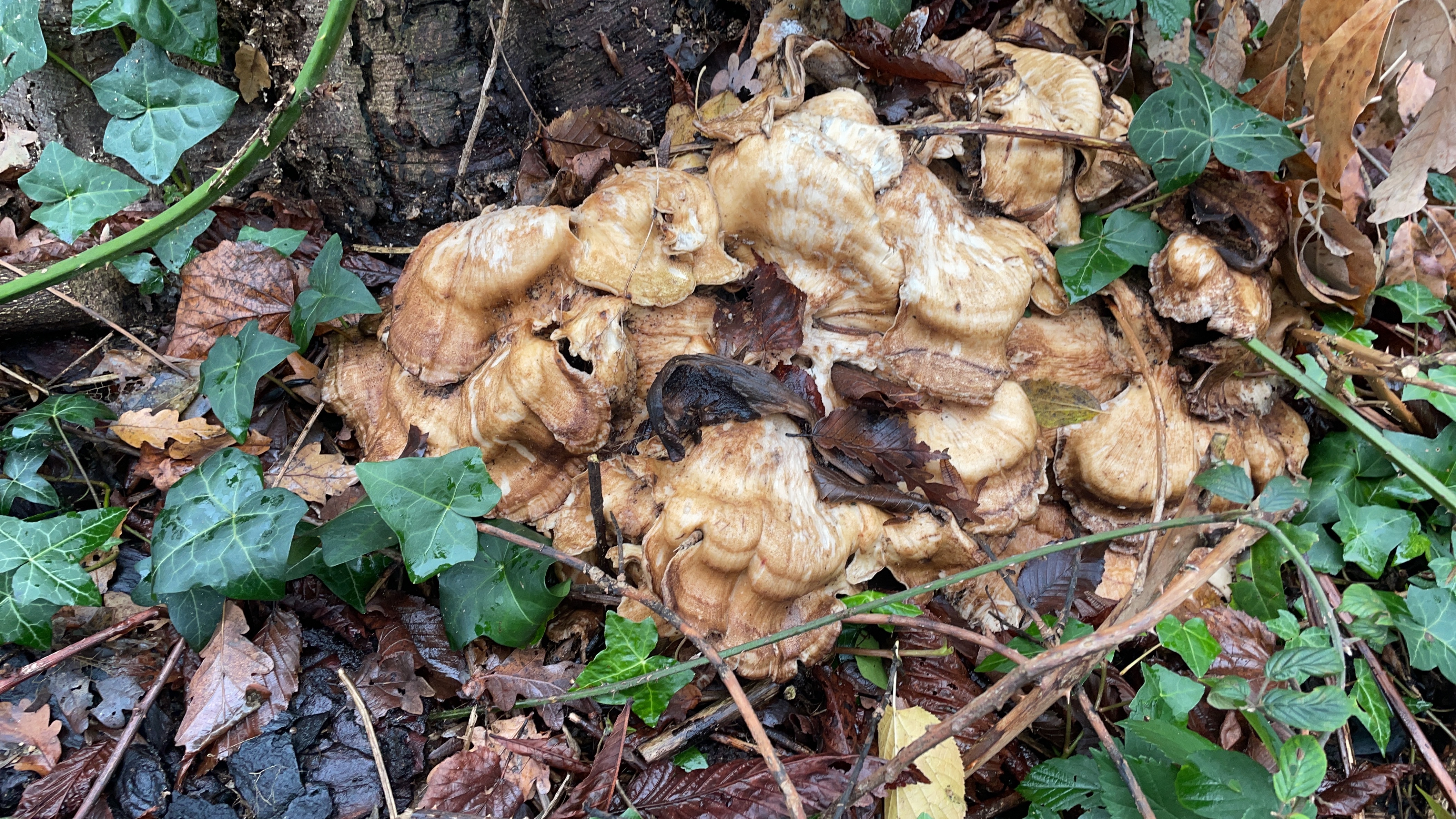
It’s hard to miss this huge bracket or shelf fungus growing at the base of the Horse Chestnut tree stump near Barnes Station, just west of the station building. Giant Polypores can grow up to 250cm in diameter and sometimes 90kg in weight, so our specimen is on the small to average side of the scale! The fruiting bodies of these fungi are made up of large, overlapping, fan-shaped segments that are pale brown on top when young, and turn darker as they age. “Polypore” means “many pores” in Greek, and refers to the many small pores on the underside, containing the spores. In the case of this species, the white underside turns brown and then black when bruised.
Jelly fungi (Exidia/Myxarium sp.)
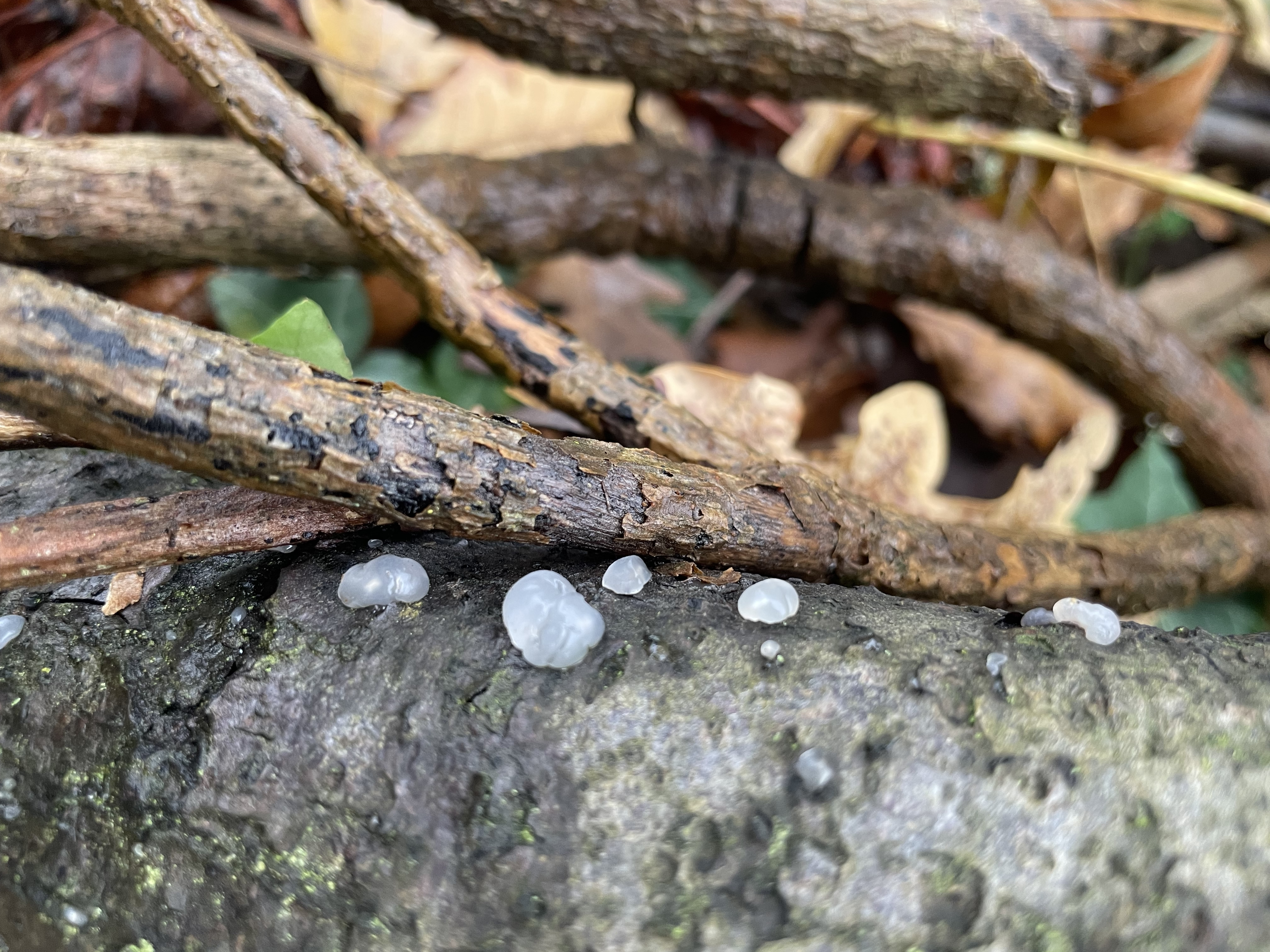
Jelly fungi, or jellies look like small, translucent blobs for the most part, and can be confused with slime moulds – a group of curious organisms that aren’t fungi (or plants or animals for that matter) at all. We found some on the dead hedge along the cricket pitch that look like small whitish blobs and are probably Crystal Brain Fungus (Exidia nucleata / Myxarium nucleatum).
Jelly Ear Fungus (Auricularia auricula-judae)
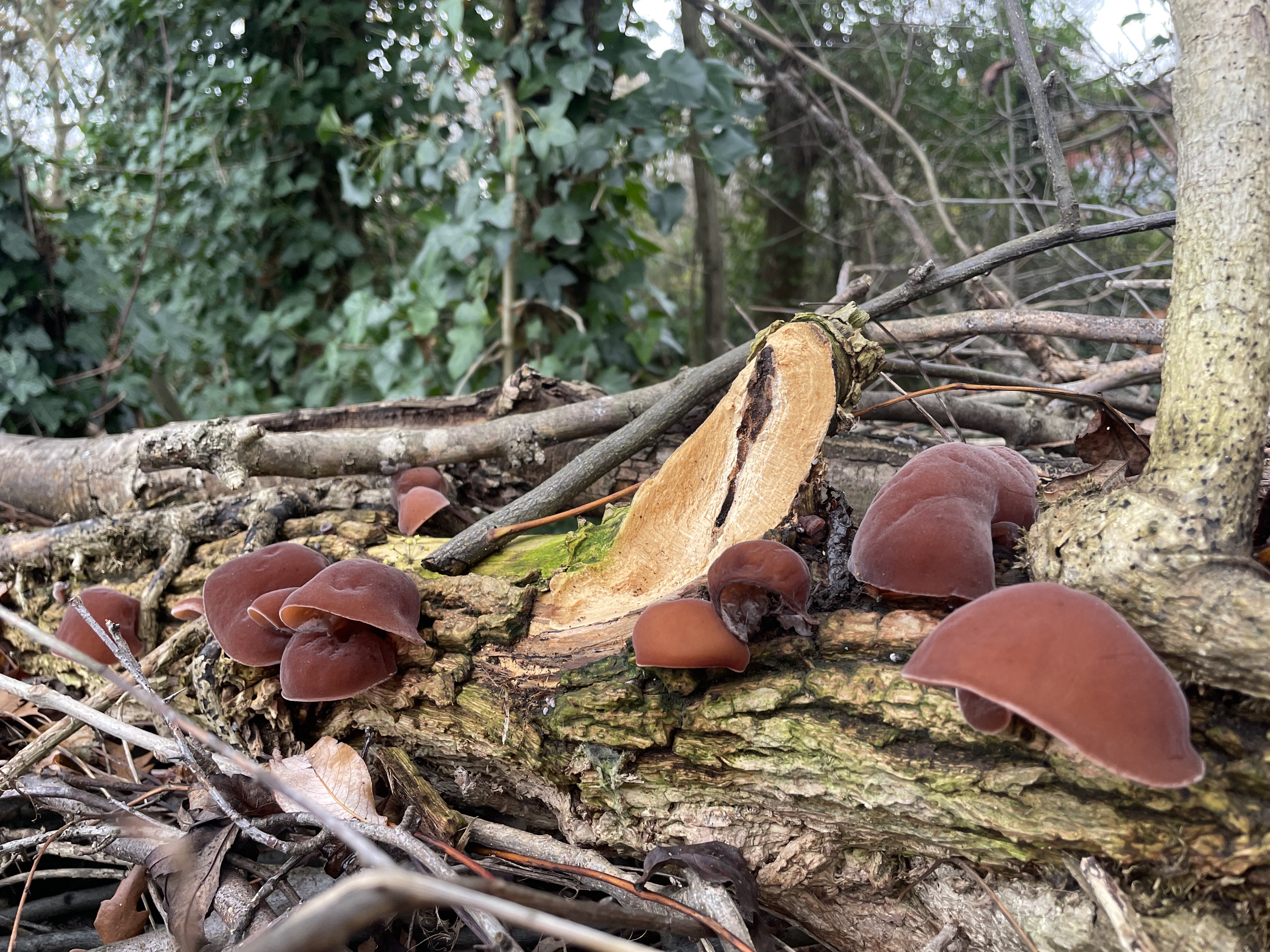
These very common jelly fungi usually grow on Elder, both on living and dead branches. You can see them on the living Elders near the little bridge on Barnes Green (look for them at head height), hanging upside down, and also on the dead hedge along the cricket pitch (the path leading to Barnes Station). They are translucent, reddish brown and do look a bit like earlobes. Their size can range from 3 to 10cm – the ones we found on deadwood were on the larger side, while living wood supported smaller specimens.
Layered Cup Fungus (Peziza varia)
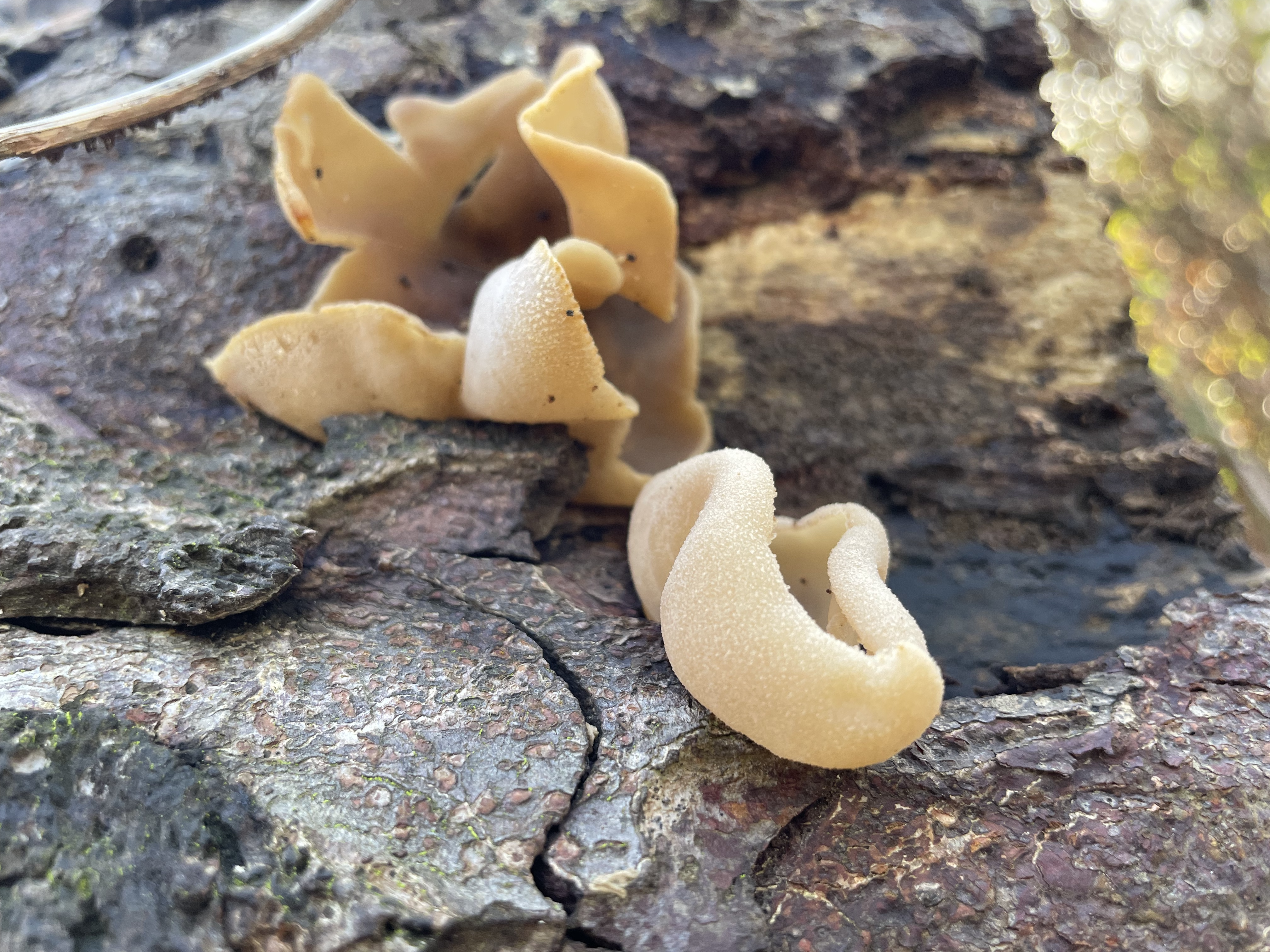
This pale fungus has a round cup shape when young that later changes to a flattened, irregular shape and it’s attached to the deadwood underneath at a single point. The inside of the cup is pale or light brown initially, later turning a darker shade of brown. The brittle flesh shows layers inside when broken. We found it on the dead hedge along the cricket pitch path.
Orange Cup (Melastiza cornubiensis)
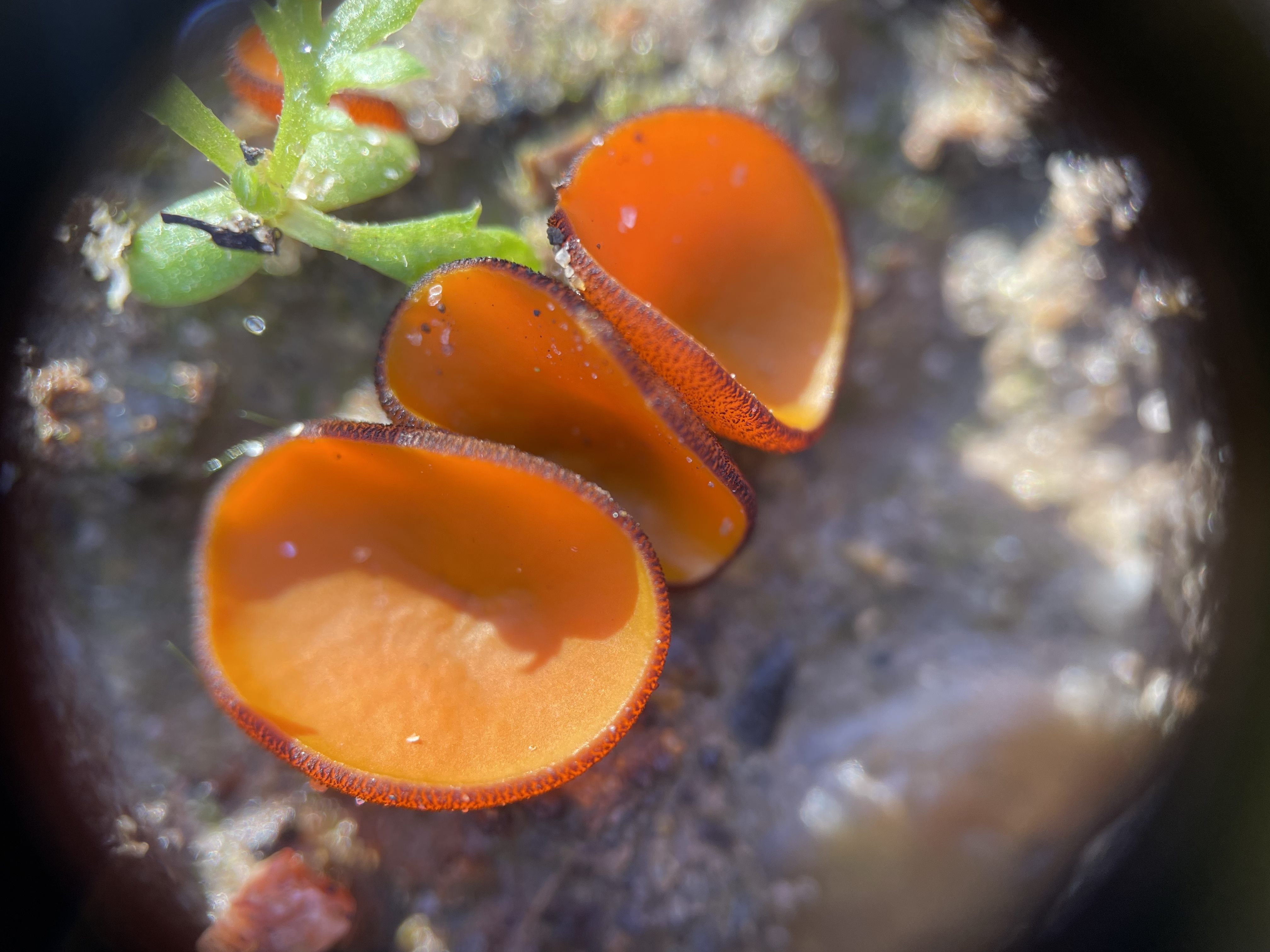
We spotted a sprinkling of bright orange coloured, cup-shaped fungi on the bare ground of the path by Fidus Pond on Vine Road. These were Orange Cups, growing in small clusters in the winter on sandy or gravelly soils. The individual fungi are disc-shaped or cup-like, about half an inch wide, with a brown line of short hairs circling their margins. They can be found all over the country, but are infrequent.
Silverleaf Fungus (Chondrostereum purpureum)
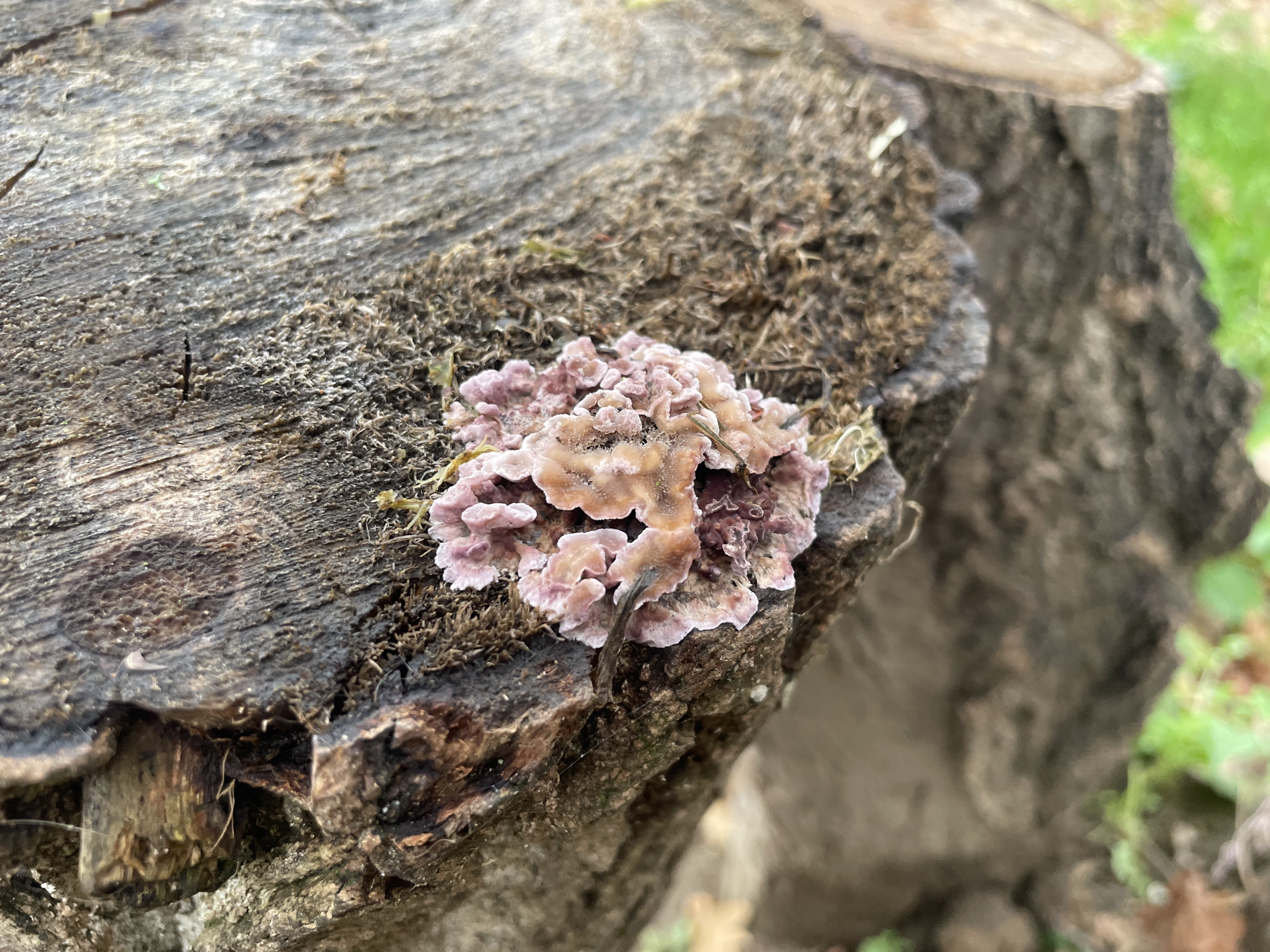
This beautiful, pinkish purple, later violet-brown crust fungus usually grows on fallen and standing deadwood (tree stumps) – we saw it near the small pond at Vine Road crossing. It can be found year round, but it is especially noticeable in the winter. Its spores can enter the freshly pruned branches of fruit trees (Plum, Cherry, Apple, Pear), especially if they are pruned in the autumn or winter, and cause the whole branch to die eventually. The leaves of the affected branch develop a silvery sheen, hence the name.
Wrinkled Crust (Phlebia radiata)
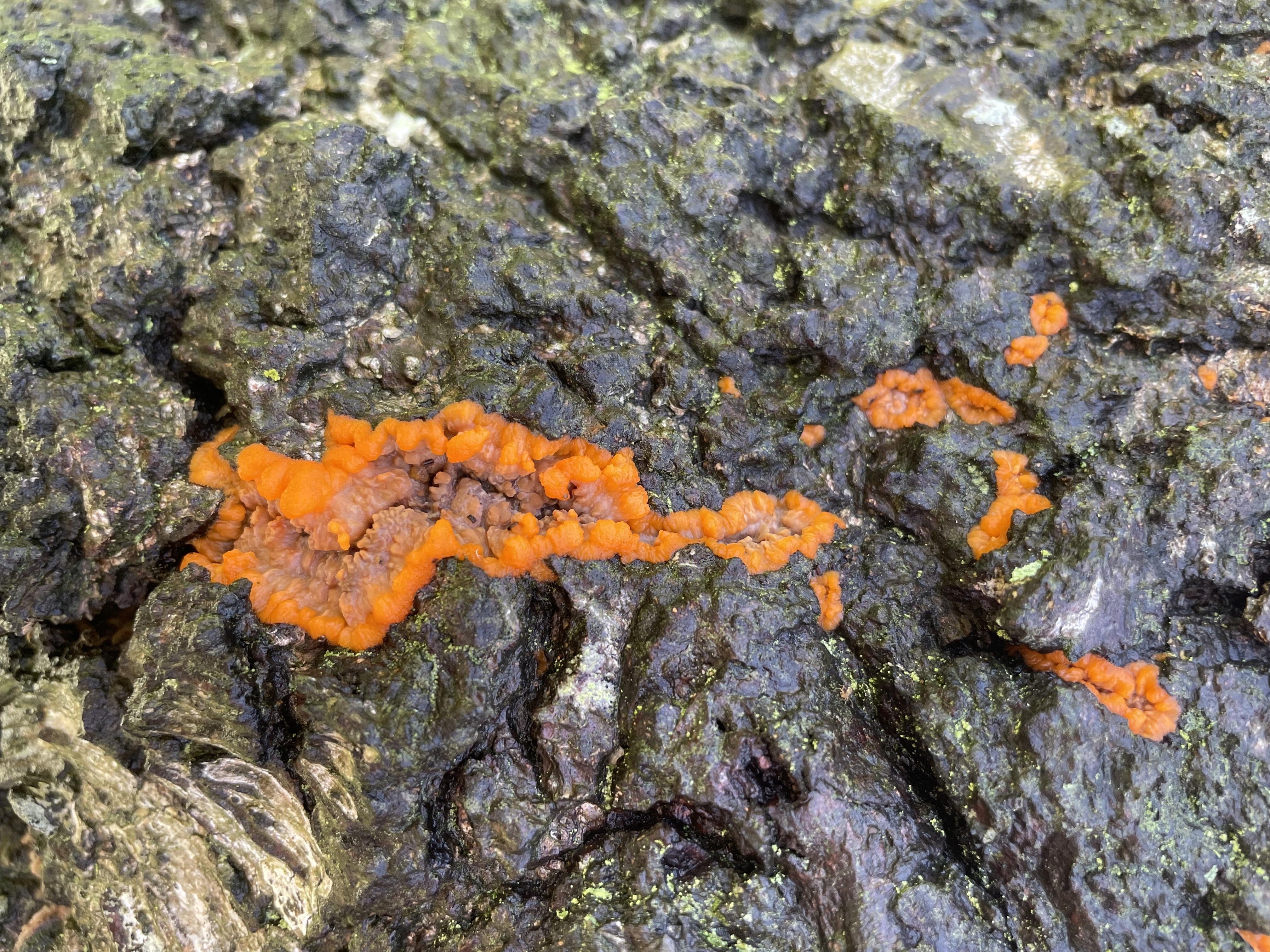
A bright orange crust fungus, Wrinkled Crust grows as a circular or oval crust about 4 inches across on dead broadleaf trunks and branches in autumn and winter. We saw it on the birch trees on Mill Hill. It causes a white rot, breaking down not only the cellulose of the tree but the ligning as well (as opposed to brown rot, which only breaks down cellulose and leaves the lignin structure). White-rot fungi are thus able to return most of a tree’s nutrients into the carbon cycle that would otherwise remain unaccessible. The soft texture of the fruiting body of this common fungus hardens with age and loses some of its bright colour, turning more brownish.
Coral Spot (Nectria cinnabarina)
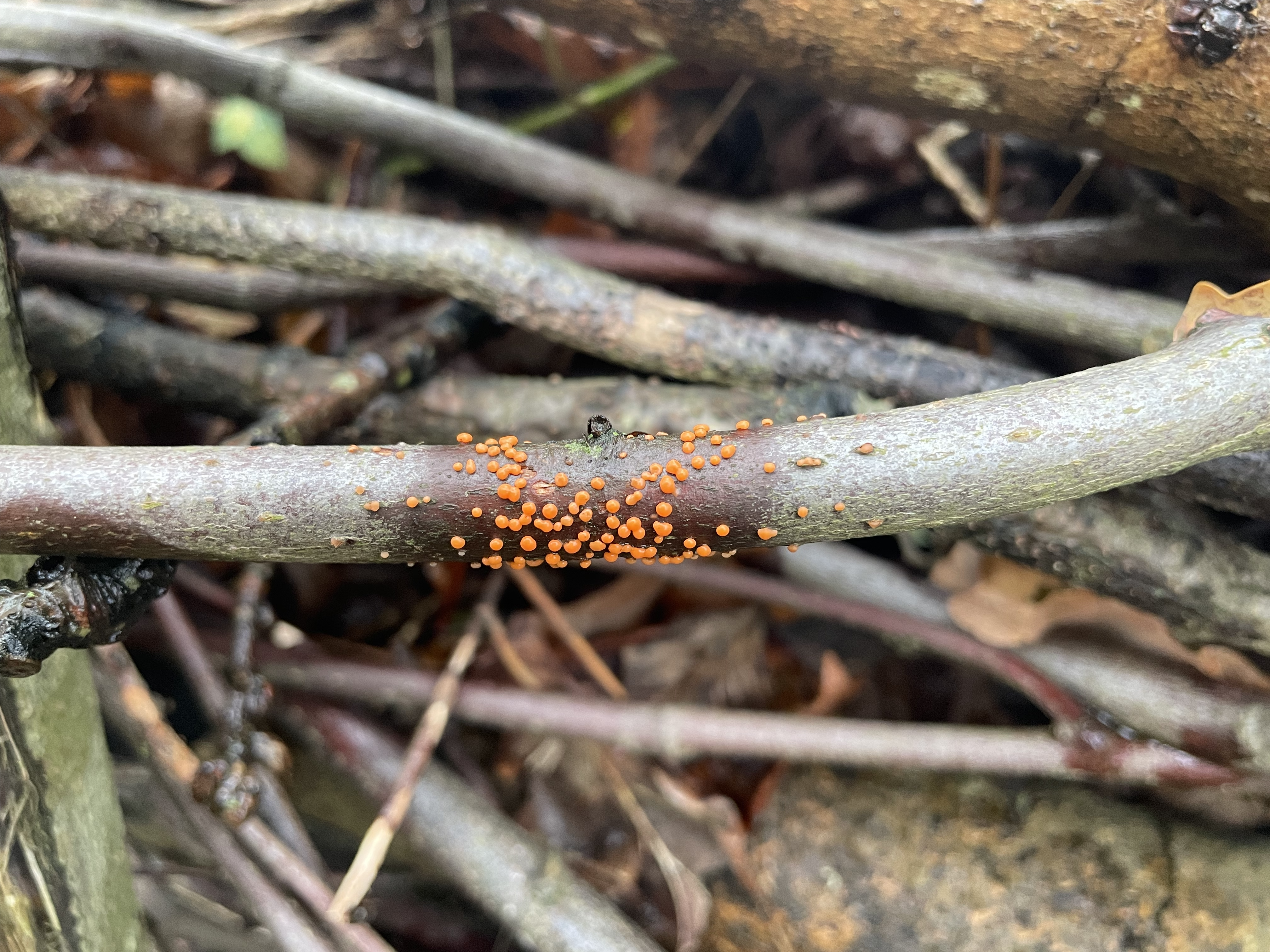
This very noticeable fungus forms a striking pattern of small orange, sometimes pink spots on deadwood, usually on dead branches of hardwood trees. It can also infect living trees if they have been weakened by wounds or environmental stressors. This fungus can be found year-round, but most often in the autumn and winter – we saw it in our dead hedge. The second part of its binomial name comes from the scarlet-coloured mineral cinnabar, also known as mercury(II)sulfide, which has been used as red paint since ancient times – the Cinnabar Moth also got its name from this mineral.
Wrinkled Peach (Rhodotus palmatus)
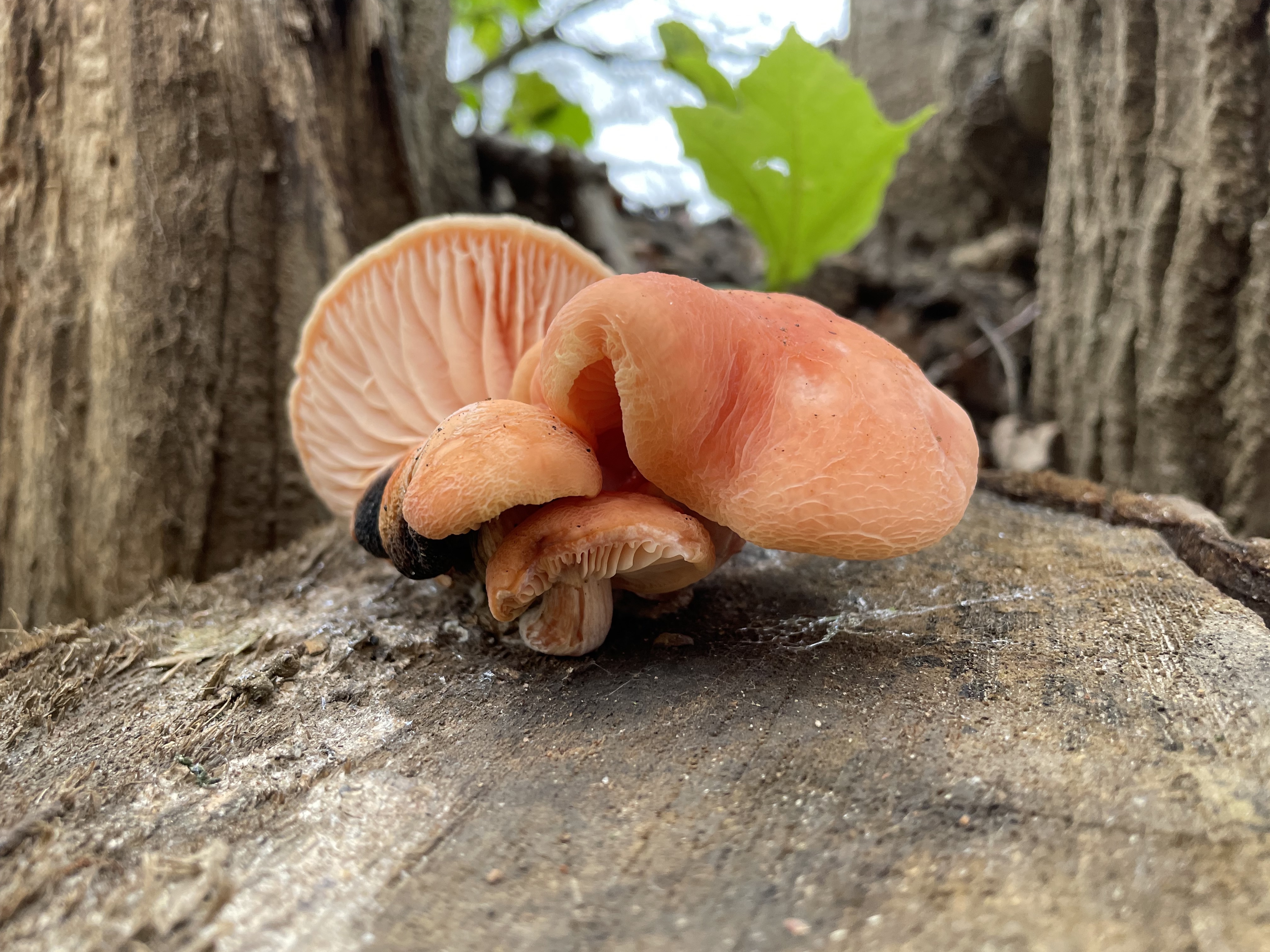
Walking past the freshly named Fidus Pond near the Vine Road level crossing, you can see some large deadwood on the raised area behind the pond. These decomposing Poplar stumps are now home to some lovely specimens of Wrinkled Peach (Rhodotus palmatus) mushrooms. Peachy and pink when young, the edges of their caps roll inwards and become criss crossed by many lines, resembling the peach in their name. Some of the gills on the underside of the cap are short and don’t extend all the way from stem to the edge of cap: these are called lamellulae and can be a useful ID feature. The caps are about 1-2 inches across. As these fungi grow, they become paler in colour, turning from pink to cream.
Bonnet Mushroom (Mycena sp.) possibly Common Bonnet (M. Galericulata)
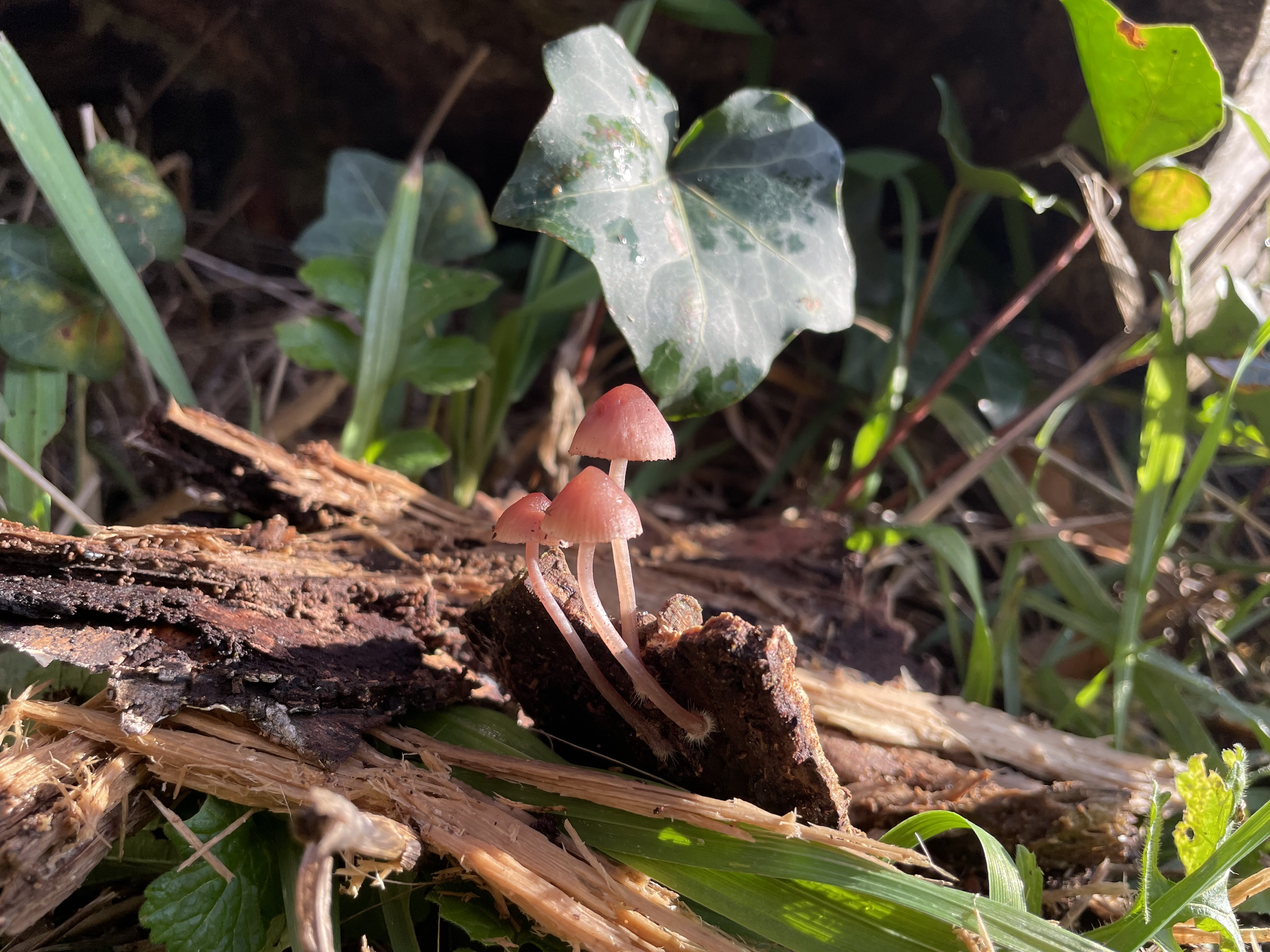
These small mushrooms grow in clusters on well-decayed tree stumps all over the Common; we found some at Mill Hill on the large fallen tree near the birches. It’s fairly easy to identify bonnet fungi (Mycena sp.) to genus level; much harder to ID the individual species. The ones we saw looked like the Common Bonnet (M. galericulata). They are small, delicate fungi, with a symmetrical, conical cap that has lines running from the peak of the cap to the edges, somewhat like the spokes on a bicycle wheel. The stem is white, the cap is variable in colour but usually shades of brown, and the gills are white or grayish, but can turn pink when mature. Like the Wrinkled Peach, bonnet fungi also have lamelullae among their gills.
Glistening Inkcap (Coprinellus micaceus)
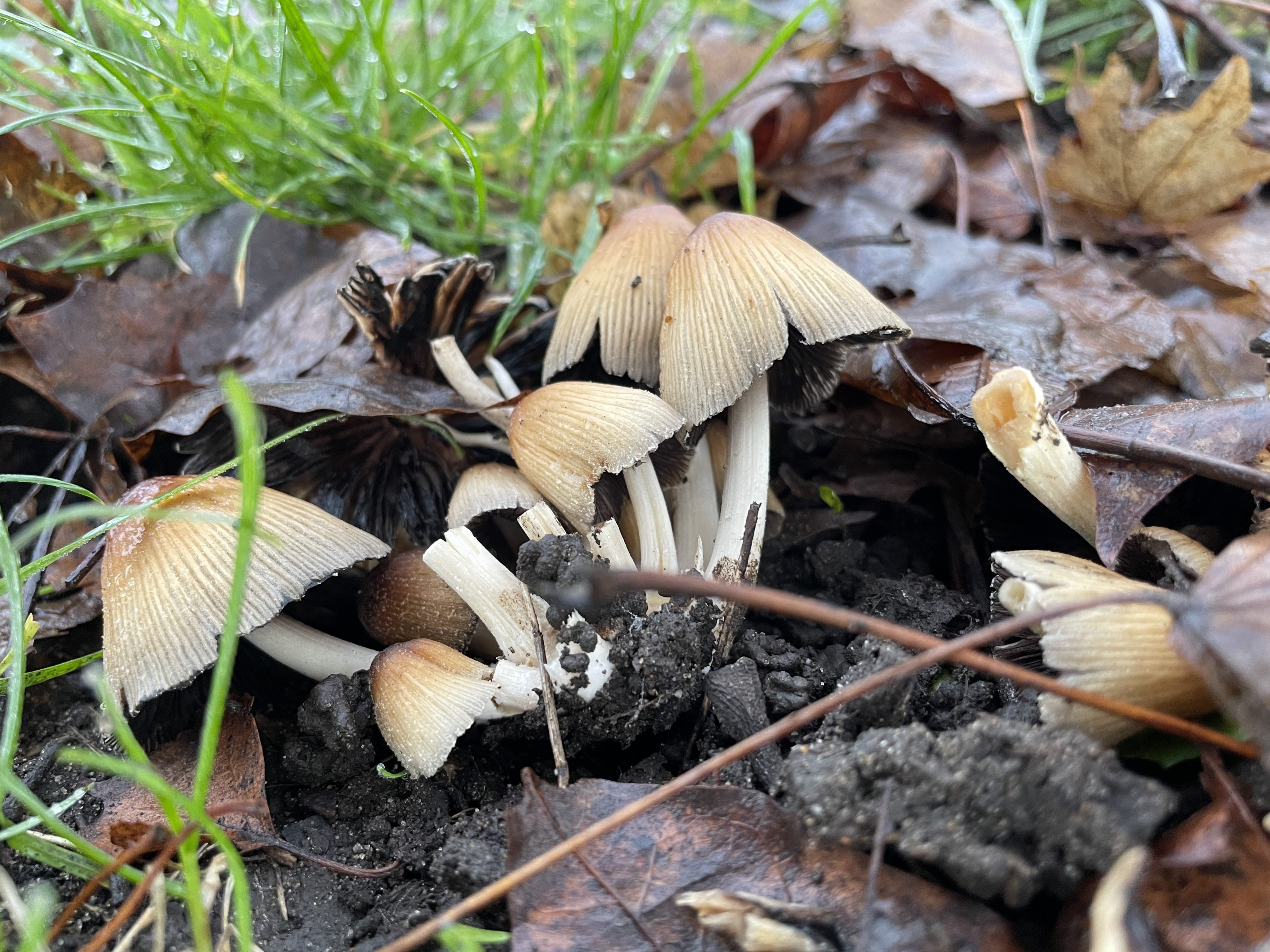
When young, the pleated caps of this fungi are covered in fine, shiny, powdery granules. The pale brown, oval caps open as they grow older and darken in colour. As with all inkcaps, these fungi autodigest, start breaking down their own tissues with their gills decomposing into a black, inky pulp a few hours after being picked. They live on deadwood which can be a well-decayed tree stump, or underground tree roots. The caps of young fungi are about an inch across, later opening to a diameter of up to 2 inches. They are very common; we spotted them at Vine Road Rec, along the path to Westfields.
Candlesnuff Fungus (Xylaria hypoxylon)
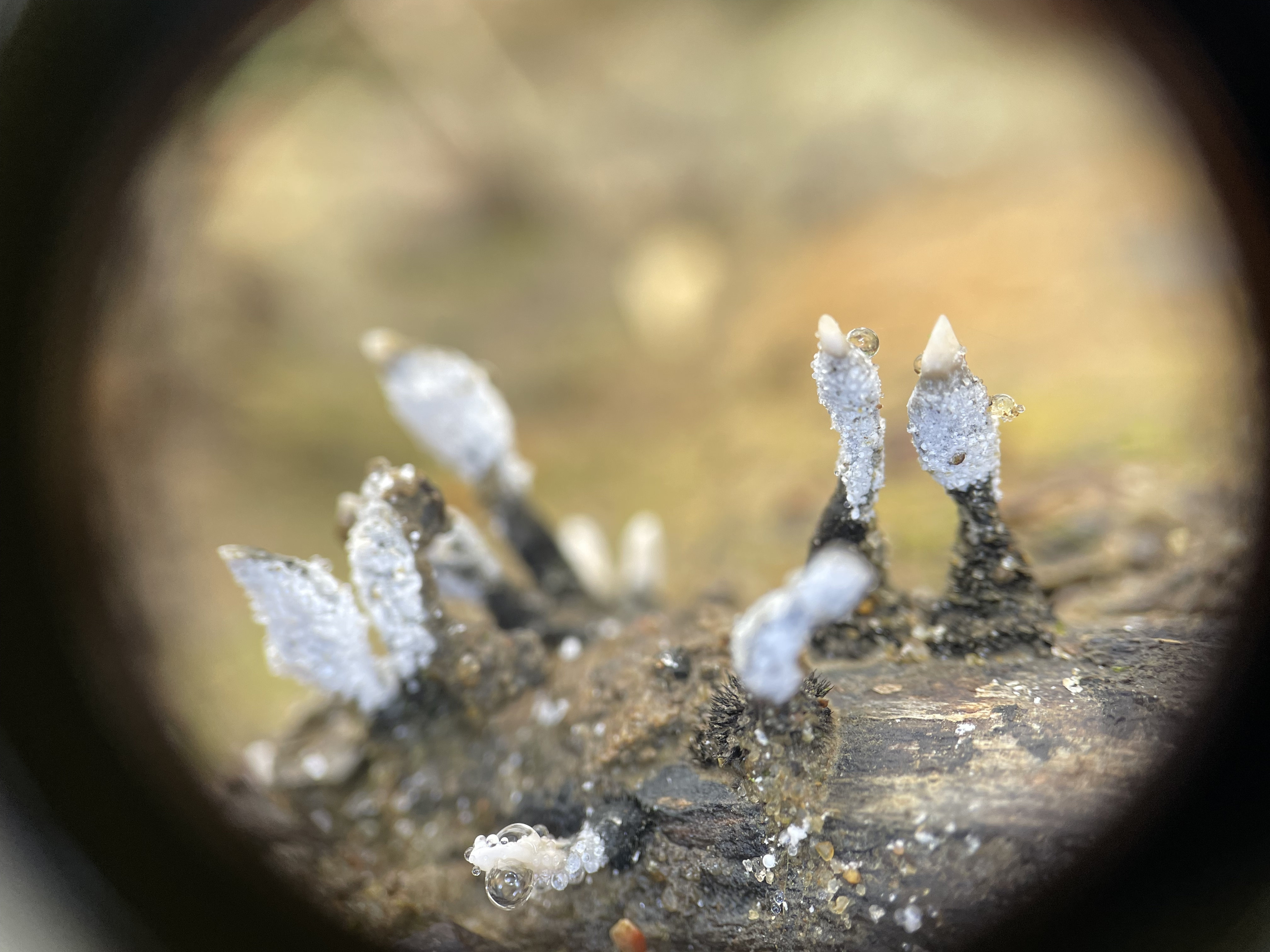
These tiny fungi are very common, but can sometimes go unnoticed due to their small size. They grow in small groups on dead and rotting wood year round. They have simple fruiting bodies about 1-2 inches tall, although the ones we saw were only half an inch tall. They are black and hairy at the base and grey and powdery at the tip, resembling a snuffed candle wick. As they grow, their stems can flatten and start branching like antlers, giving them their other name, Stag’s Horn.
Fungi play important roles in ecosystems: they break down dead organic matter, making nutrients available to other organisms and keeping it moving through the carbon cycle. Underground, the hyphae of fungi form a vast network (the “wood wide web”), joining plant roots, connecting individual plants with each other, transferring nutrients and information between them. These mycorrhizal networks are vital for the growth of most plants.
A note on foraging: Barnes Common is a local nature reserve, so no foraging or collecting of specimens is allowed. Please enjoy the Common, look for fungi and take photos of your finds. Send us any interesting sightings, we’d love to hear about your discoveries!