

You may notice some areas of bare ground appearing across Barnes Common. These carefully planned soil scrapes are part of our work to restore the Common’s nationally important Lowland Acid Grassland.
Although the scrapes can look quite drastic at first, removing the nutrient-rich topsoil exposes the nutrient-poor sandy soils needed by the habitat’s characteristic fine grasses and wildflowers. Over time, acid grasslands can become dominated by dense grasses, mosses, scrub, and leaf litter. This reduces diversity and makes it difficult for the specialist plant species to survive.
The warm, open ground of soil scrapes also provides valuable habitat for solitary bees, wasps and other invertebrates. Over the last couple of months, we were visited by bee and wasp expert Tony Madgwick to survey these groups across all our lowland acid grassland sites. This revealed several local and nationally significant species. Providing a suitable habitat for these invertebrates will form part of our ongoing conservation management.
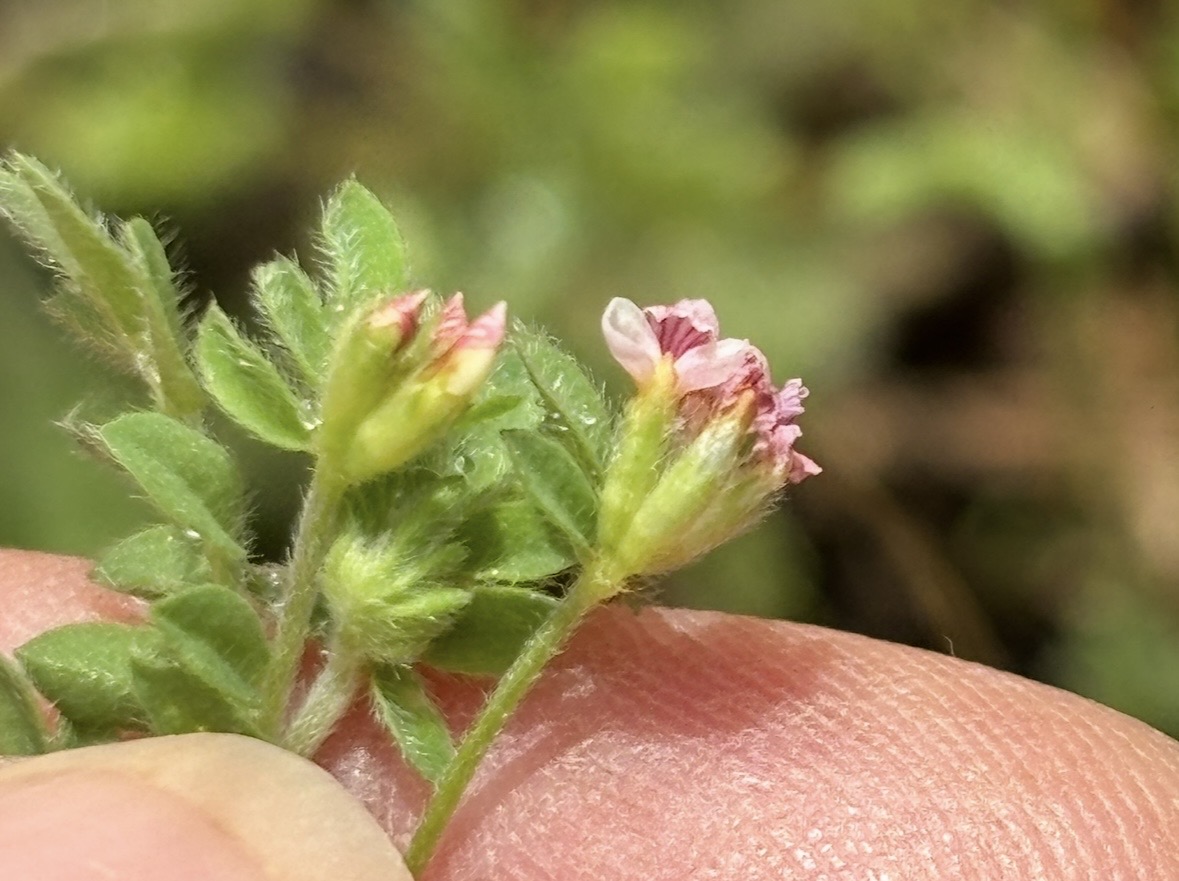
Analysis of the soil at these sites has shown us that typically only 5 – 10 cm of nutrient-rich topsoil needs to be removed to expose the underlying acidic soil, which has a pH of 4 to 5.5. Although the soil scrapes are initially absent of plants, we know that this is only temporary. Seeds lying dormant for years and previously covered by coarse grasses or bramble are exposed to the sunlight. Before long they begin to grow and then flower, supporting a variety of specialist invertebrates. These scrapes are particularly important to help increase our population of specialist wildflowers such as Bird’s-Foot, which only remains in small numbers at three locations on Mill Hill. This plant is a member of the pea family and has delicate pink flowers, producing nectar and pollen for solitary bees.
Much like ponds, lowland acid grassland habitats take time to develop. We will be monitoring these soil scrapes for the plants that recolonise and the diversity of invertebrates they also attract over the coming years.
Published on: 3 August 2026