

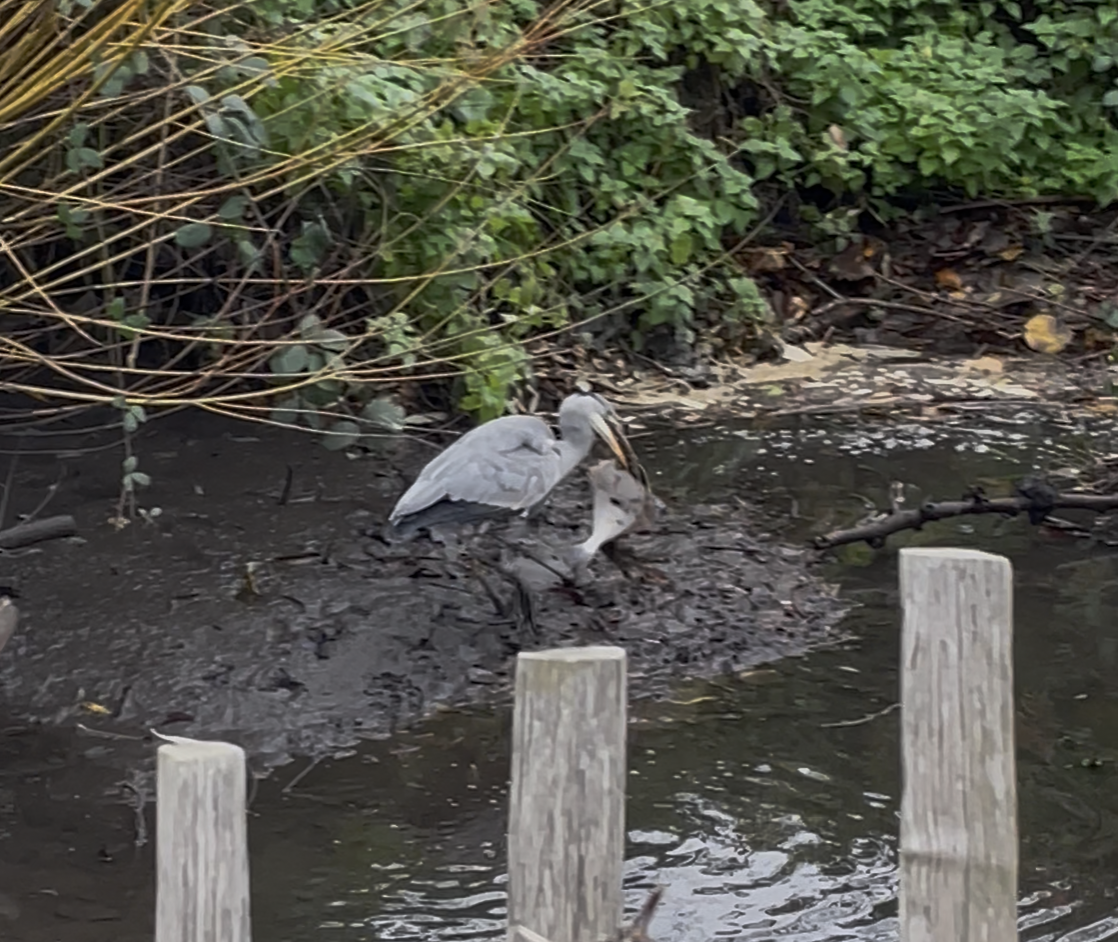
The video has gone viral on Instagram with many viewers expressing their surprise on finding such a huge fish in our small local river. If you are curious about the animal protagonists of the clip, here is your chance to find out more about them.
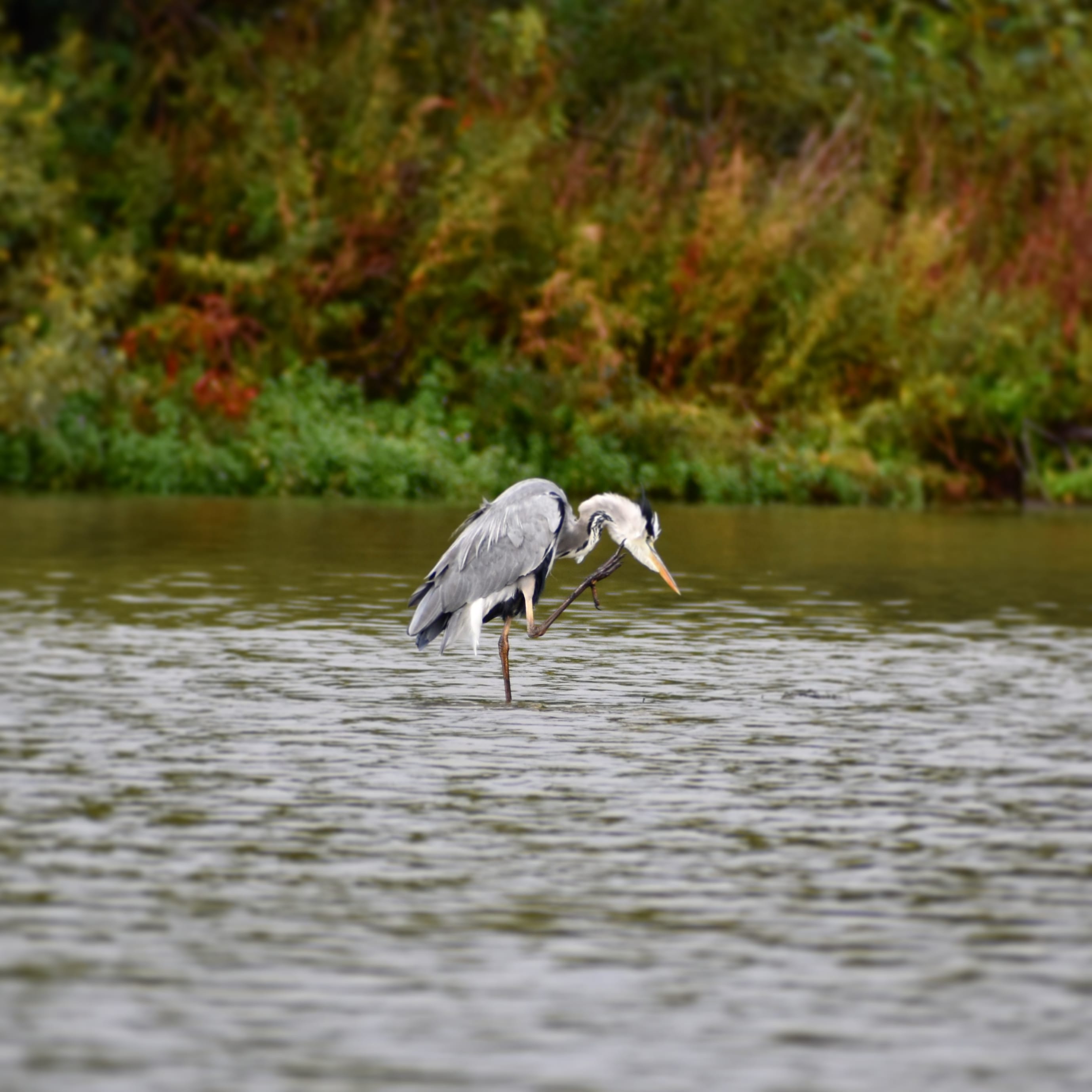
Grey Herons (Ardea cinerea) are our local apex predators. They eat a varied diet of fish, amphibians, crustaceans and insects, and they also hunt and kill small mammals like mice, and other birds (eg. ducklings). It is not uncommon for a heron to catch a fish that’s 10 inches long, or weighing as much as a pound. Not a small feat if you consider that the Heron, despite its 6-feet wingspan, weighs only about 4 pounds.
Herons are not endangered in the UK: there are approximately 13,000 nests of breeding birds and up to 63,000 birds wintering here. We have a colony of Grey Herons nesting at the Leg o’Mutton nature reserve.
Herons are very successful predators of fish and amphibians, while the low water quality of the brook negatively affects our local population of aquatic animals. In an ideal world, we would have plenty of fish in the Brook so that the Heron can take as much as it wants. But at the end of the day, Herons feeding on fish is a normal event and it is part of the life cycle of the Brook’s ecosystem.
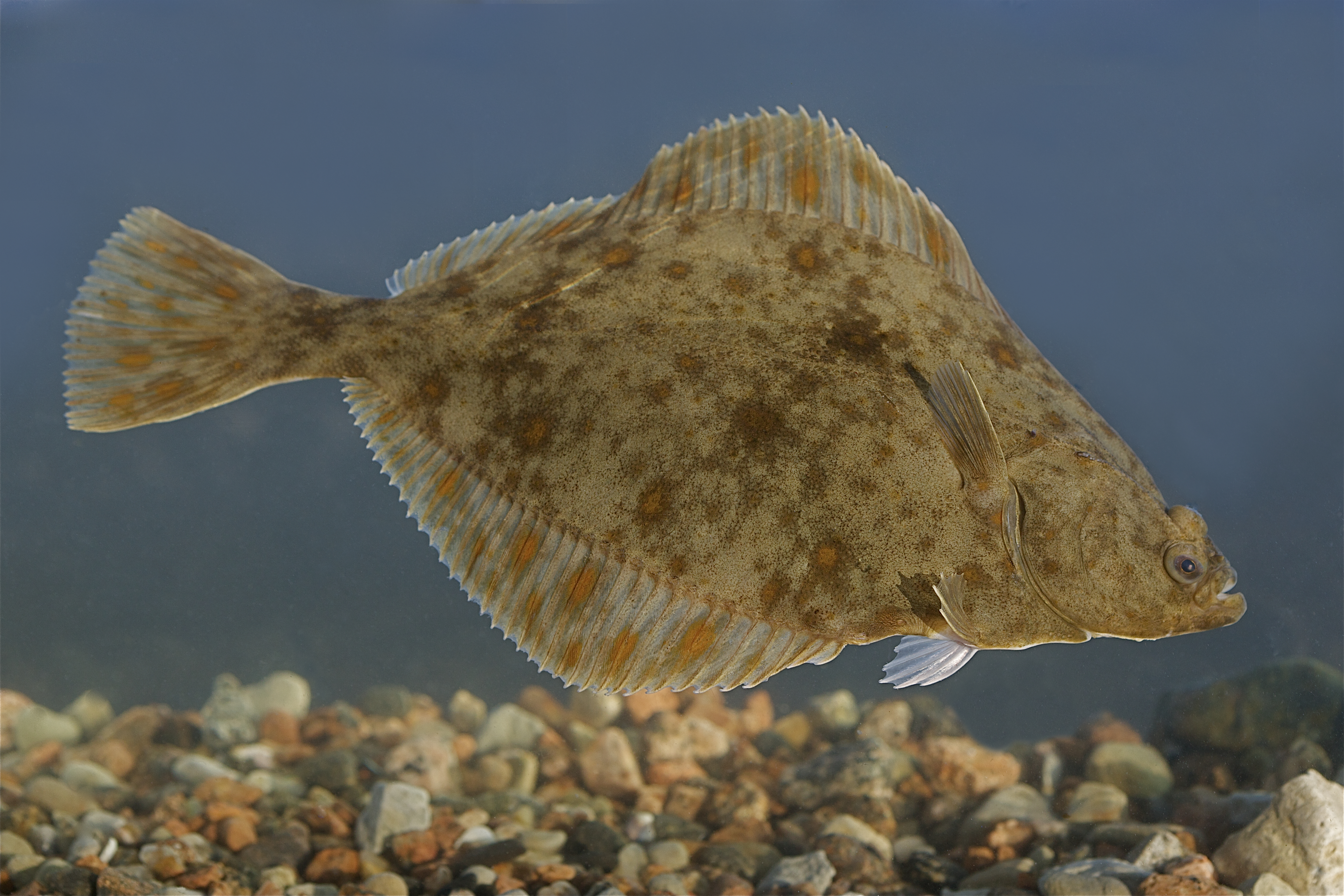
While the size of this fish surprised some viewers, we regularly see Flounder this size or even larger, and our Chub and Barbel grow fairly large too. They just do a very good job of hiding from us – not from the Heron it seems. Our surveys have recorded nine different species of fish in the Beverley Brook, and many more species live in the tidal Thames, of which the Beverley Brook is a tributary.
The European flounder (Platichthys flesus) is a marine species that spends part of its life cycle in estuaries and shallow rivers, swimming upstream after hatching in the sea. Juvenile flounders live on the bottom of the river, feeding on bottom-dwelling invertebrates and going through the eye migration as they become adults: both their eyes migrate to the right side of the fish. They swim back downstream into the sea as adults where they spawn in the spring.
While the Flounder in the video managed to get away, it looks like it’s been stabbed several times by the Heron. So it’s possible that those injuries will eventually cause its death – but we’ve also seen wildlife recover from worse injury, so fingers crossed!
Find out more about the health of the Beverley Brook and our Riverfly river health survey here.