

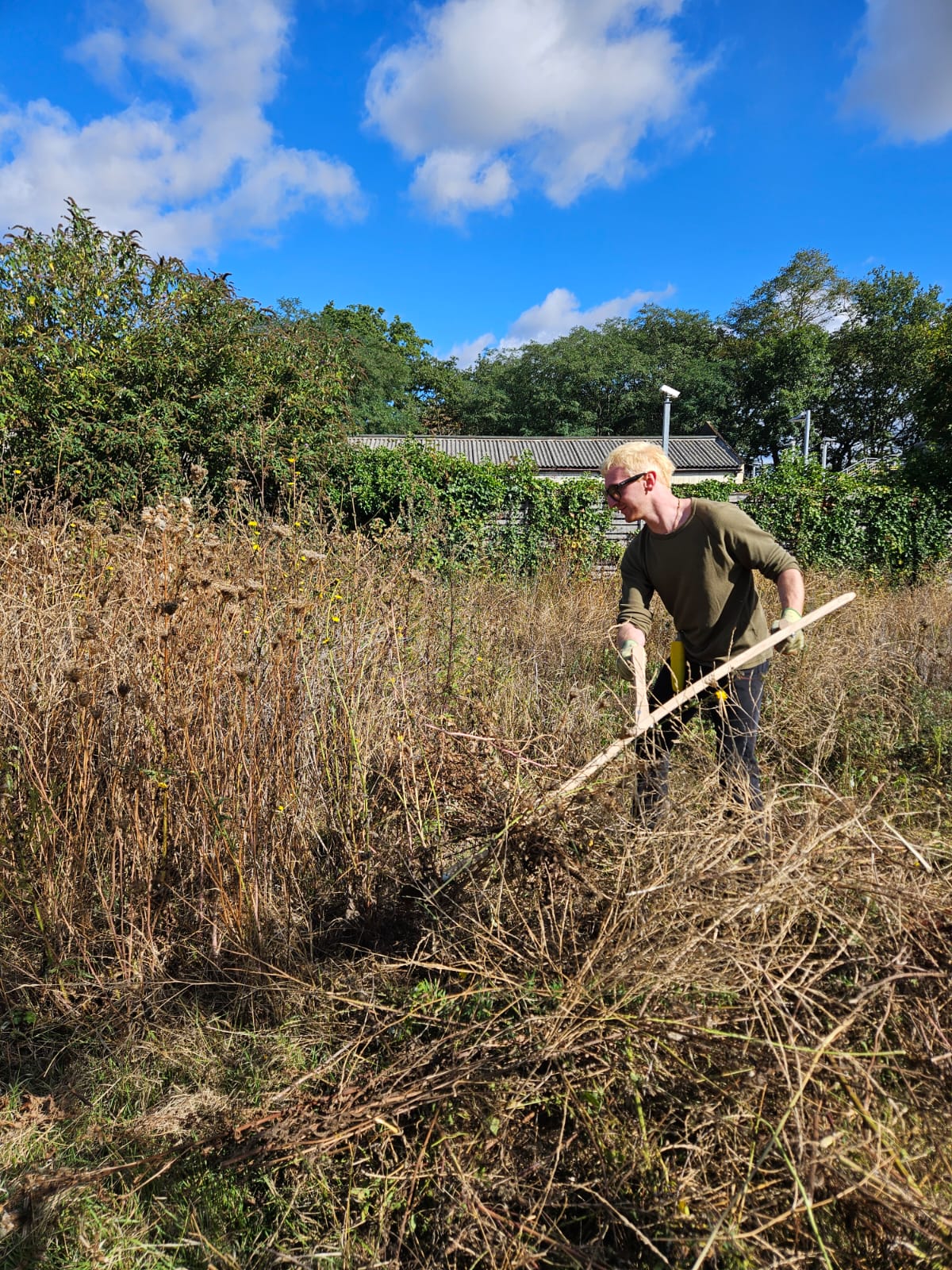
Scything is a technique that has been lost from many of our country’s meadows, but this traditional method of management is making a comeback in nature conservation. The UK has lost 97% of its species-rich wildflower meadows since the 1930s – an area one-and-a-half times the size of Wales, or around three million hectares. The resulting impact on wildlife has been catastrophic, contributing to the huge declines in invertebrates and farmland birds in particular. Protecting and improving the fragments that remain, as well as restoring lost flower-rich hay meadows, has never been more important. The revival of this ancient skill is helping conservationists do exactly that and, this summer, after receiving training from the Friends of Richmond Park, we’ve added five brand new scythes to our conservation toolkit – much to the excitement of our volunteers!
Although more conventional mowing methods are undoubtedly faster and more practical for managing large areas, tractor-mounted flail mowers have their limits. Scything allows us to manage areas that machinery cannot reach such as sensitive acid grassland, around tree saplings and small areas of species-rich grassland.
Scything alone is not enough to enhance our meadows and once cut, all the cut vegetation must be raked off and moved off site. This is the most important part of the process as removing the cut grass helps to keep soil nutrient levels low. While this may sound counterintuitive, wildflowers thrive on nutrient-poor soils. Lower nutrient levels limit the growth of vigorous coarse grasses which would otherwise dominate, allowing a more diverse range of wildflowers to flourish. In turn, these flower-rich meadows provide nectar and pollen for bees, butterflies and other pollinating insects.
Scything also offers several other conservation advantages over more conventional mowing techniques. Rather than producing a uniform cut, it creates a varied mosaic of sward heights, leaving areas of longer grass where invertebrates can shelter and feed. This structural diversity provides a wider range of habitats within the meadow and supports a greater variety of species. The slower, quieter approach also causes less disturbance and gives mammals and amphibians a much better chance to move to safety before the vegetation is cut. By allowing us to be more selective about exactly what we cut, we can also leave late-flowering plants standing, extending the availability of nectar into the autumn.
As our volunteers enthusiastically test out their new scything skills, it harks back to a time when scything was the main way our hay meadows were managed. Following the mechanisation of agriculture, this technique largely disappeared from meadow management, but its revival provides an opportunity for people to work in their local meadows and understand their importance as biodiversity hotspots. By combining traditional skills with modern ecological knowledge, we can manage our meadows in a way that is both surprisingly practical and highly beneficial for wildlife.
We’re looking forward to developing our volunteers’ scything skills over the coming years and seeing the positive impact this traditional craft will have on the biodiversity of Barnes Common.