

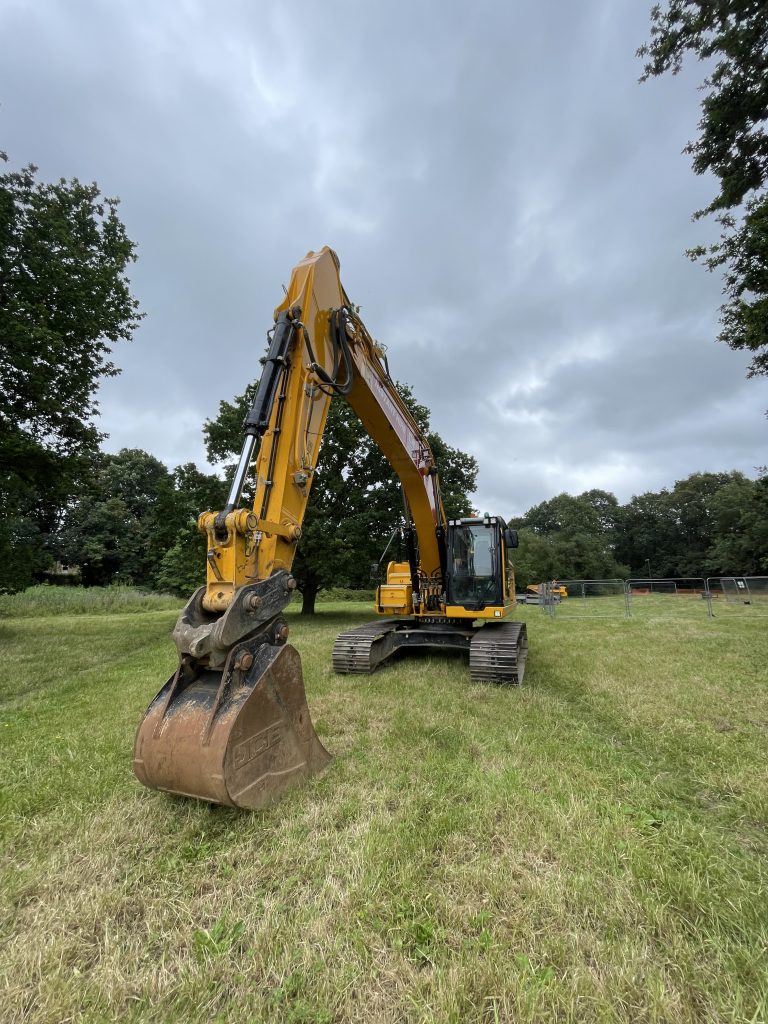
Anyone walking onto the Common late in July can hardly have missed the large construction equipment busy at work on our new reedbeds. It is always a heart stopping moment when large machinery arrives on site, but the contractors have done a great job, damage has been minimal and we not only have two new reedbed areas dug, but also a potential new grassland meadow area. Recovery will be swift, but allow a couple of years for things to sort themselves out – writes our Chair, Mike Hildesley for our August newsletter.
Our thanks to Community BlueScapes: This project has been developed with and funded by Community BlueScapes (‘CBS’), itself funded by Defra, which aims to improve flood resilience working with the community and using nature based solutions. We are thrilled to have these new reedbeds on the Common.
As a partner with Richmond Council and WWT in CBS, we are also delighted to see the progress being made on so many fronts. The new reedbeds are the first of several projects designed to add flood capacity, within the existing flood plain of the brook or otherwise, which will be useful if and when we get severe storms, (as here in July 2021 or last week in parts of Hampshire – some places had over 5cm in an hour!), especially if these coincide with high tides. Other CBS projects you may have noticed or be aware of include the recent work in Kitson Road, and CBS are supporting several projects proposed by members of the community. There are things we can all do to improve flood resilience. More details on these and CBS more widely can be found here.
We will be looking for volunteers to help plant up the reedbeds later this year – let us know if you are interested in what will be a lovely, messy and hugely rewarding activity! Please get in touch if you’d like to help.
It is not just flood resilience: With our Barnes Common hat on, we would add that the reedbeds will not only provide more biodiversity and improve the habitat of the corridor of the brook, but also add resilience to climate change – retaining moisture, capturing carbon and cooling the air (wetlands are typically more effective than trees in the short term and can be as effective long term as well).
We also get a new meadow area: The soil dug out has been repurposed on the Common, creating a new meadow and woodland glade area where previously there has been a large patch of non-native invasive snowberry of limited biodiversity value: we plan to see what germinates naturally from the soil seedbank as well as airborne: we will see in future years if this needs augmenting or controlling, but are hopeful that, like the former good yard, we can in time achieve a sustainable species rich neutral grassland and glade adding to the mosaic of habitats on the Common.
So, overall we control the invasive snowberry, add to our species rich meadow grasslands and add to our wetland/reedbed coverage: that sounds like win-win-win, and to judge by the first reedbed, we should see benefits as soon as next summer, which will then continue to improve over the coming years.
The Orchard and Meadow at Former Goods Yard: The Access-for-All project at the station has over-run, in part because it proved necessary to lay a new power supply, and getting permissions for this has taken a long time. We will re-assess the restoration work needed once the site is vacated – no date has been given yet – the delay will not have helped, but funding has been provided for the restoration and it has been agreed that BCL will itself undertake this.
Although we have sorely missed the joys which this relatively new meadow has provided in recent years, the butterfly transects and other checks on the unaffected areas shows that the biodiversity remains good and we can expect the process of improvement will resume its upwards trajectory – we will take a little time to assess what will be best within the area of the work site and access lane, and will be looking to achieve and maintain at least 10% biodiversity net gain in both the meadow and woodland areas within 10 years. We will give more details once we have re-assessed.