

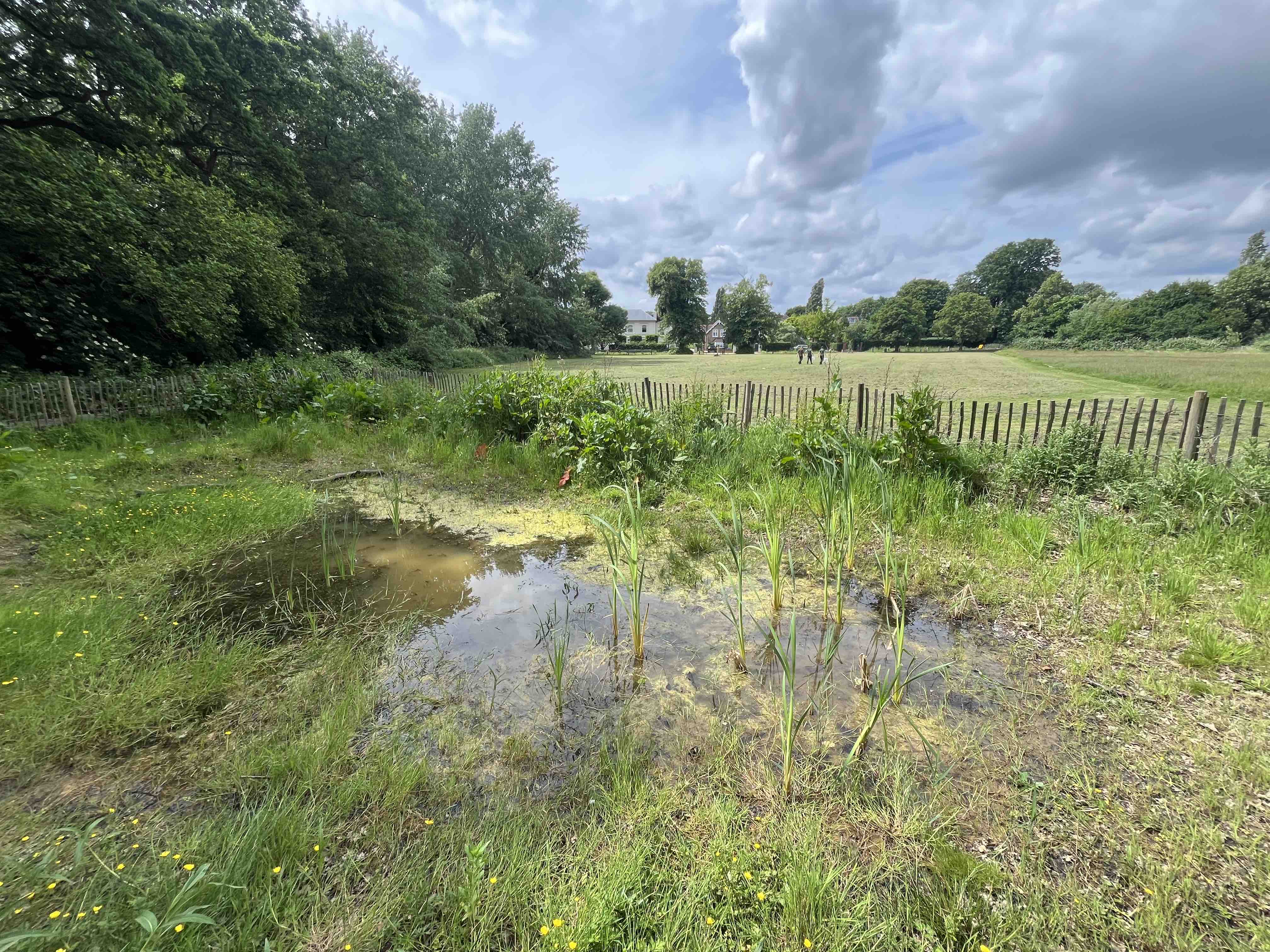
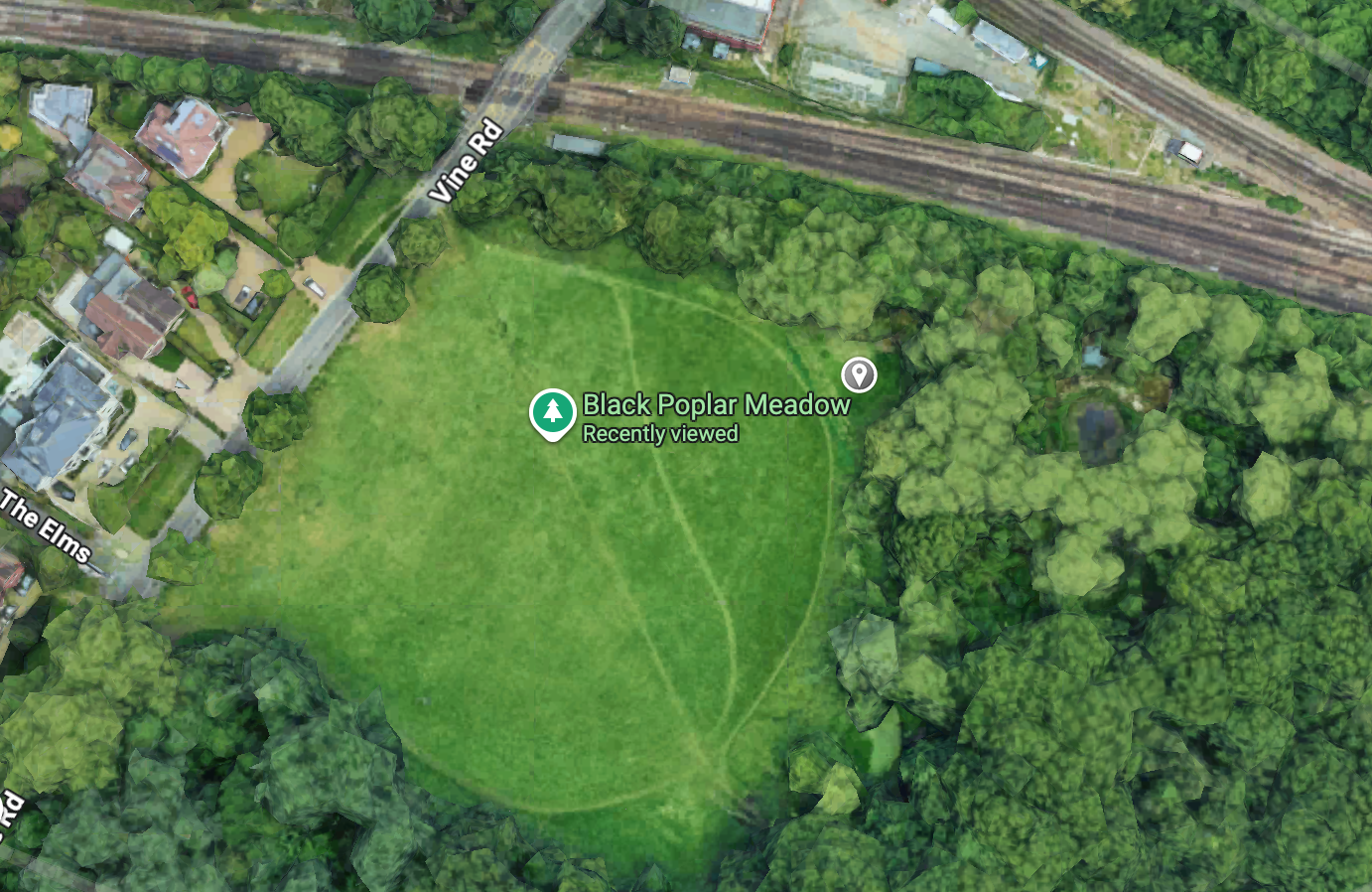
With the continuing lack of rain and relentless heatwaves, much of our time is currently being spent watering young hedges and newly planted trees across the Common. It may, therefore, feel like a strange time to be talking about ponds. However, we are looking ahead to wetter times and are hoping to create a new wildlife pond next to the existing pond in the corner of the Black Poplar Meadow (click here for map link). It’s good to know we’re not alone in wanting to see more ponds: 94% of respondents to our pond survey said they would like to see new ponds created and/or existing ponds restored.
Ponds are among our most valuable wildlife habitats, and the need for clean freshwater habitat could not be more evident than during the drought conditions we are currently experiencing. One of the main issues facing wildlife ponds in the urban environment, particularly where they cannot be topped up, is that they dry out too early. If a pond dries before amphibians and aquatic invertebrates have completed their life cycles, this can contribute to population declines over successive years. In 2025, 49% of ponds surveyed in our local public parks and allotments dried out prematurely.
To help the new pond hold water for longer and be resilient in the face of climate change, we are planning to line it with clay. The water level will still drop during the summer months and, in a year such as this one, the pond may still dry out altogether. However, if we can retain water further into the summer, it will be a huge help, particularly for our local amphibian populations. This will be particularly beneficial for the Common Frog, which prefers to spawn in small and shallow ponds that are the first to dry out.
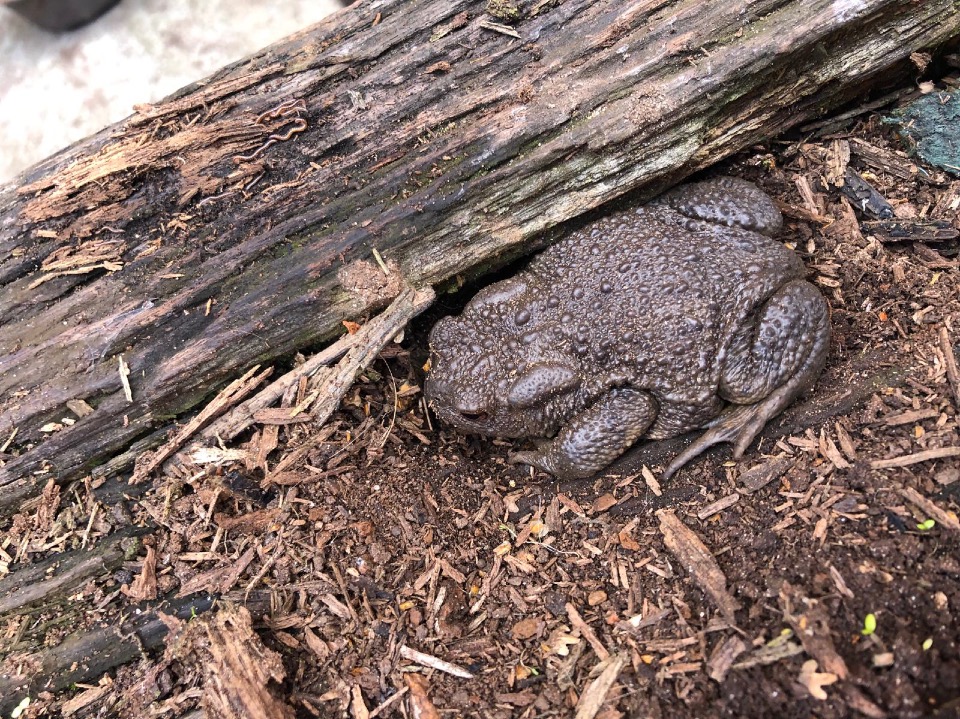
New ponds take time to develop, and it may be several years before the plants establish and the pond reaches its full potential. This is why it is crucial to continue to create new ponds, ensuring that ponds of different ages are always present to support a diverse range of ecosystems and species. Watching it gradually colonise and change will be an important part of the project, and we will also be carrying out surveys each year to monitor its development. We are hopeful that this new pond will attract the Common Toad. Although 22% of correspondents to our recent questionnaire reported observing the Common Toad in their garden, this was lower than all other native amphibian species. In addition, the Common Toad was only found breeding in two local public and allotment ponds across Barnes, Palewell and East Sheen in 2025. The Common Toad has undergone substantial declines across the UK in recent decades, driven by factors including habitat loss and fragmentation, road mortality, and the decline of suitable breeding ponds.
We are planning to create the pond in September, and if starting a job that requires dry weather doesn’t bring the rain back, then I don’t know what will!
Published on: 3 August 2026