

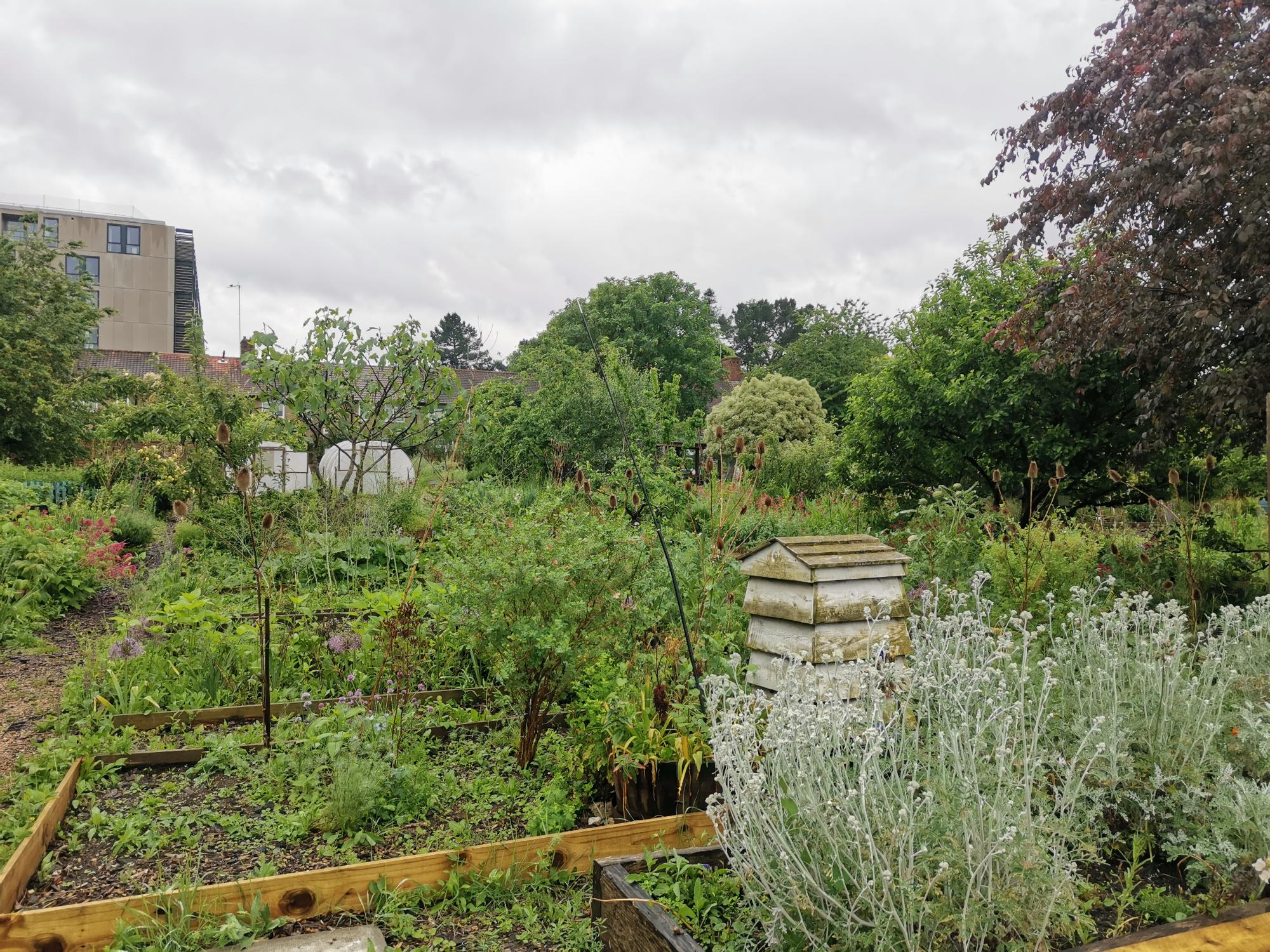
A recent talk on ‘ruderal plants’ from the charity Plantlife yielded a surprising fact – the impact of industrial agriculture on the rural landscape of the UK means there is now more species diversity in London than in many rural areas. Cities – with their parks, community gardens and networks of back gardens – have the potential to become havens for plant and animal life. More than ever, our back gardens can provide valuable habitat for wildlife. Many of us are aware of small actions we can take to make our gardens more wildlife-friendly, such as including a water-source, creating log piles or planting some wildflowers. However, given the potential for species to proliferate within cities, can we go further, and really maximise the potential of these small, urban ecosystems? This month, we’ll tackle the question, “what can I do enhance biodiversity in a small urban garden?”.
One approach that is really helpful here is a phenomenon known as the ‘edge effect’. An ecological phenomenon often incorporated into permaculture design, the ‘edge’ refers to the point at which one kind of ecosystem meets another. This point is often particularly diverse, more so than either ecosystem its own; this increased diversity is the ‘edge effect’. The edge could be, for example, the point at which woodland starts to turn to grassland, or the shallow part of a pond, just before it meets land (known as the ‘littoral zone’).
The edge of two ecosystems will have many of the advantages of both. The edge between woodland and grassland, for example, will have the three-dimensional structure of the woodland, and the lack of shading enjoyed by grassland. Woodland shrubs benefit from the extra light, and so often produce more fruit here. Animals have a wider variety of food sources, whilst still being able to take advantage of the shelter provided by the woodland. Species from both ecosystems can survive here, and there will be a further group of species who can only survive on the edge.
We might not have a woodland and a grassland in our back garden, but we may well have a tree and a lawn. A gradual edge is more productive than an abrupt one, and so in this situation we can think about how to ‘soften’ the edge. Could you, for example, fit in a currant bush and some borage under the tree? Perhaps add in some early flowering bulbs, and some cyclamen for autumn and winter? As well as creating more diversity, this makes the area more attractive.
If you have a small garden pond, creating sloping, gradual edges (as opposed to a steep drop) is really important. Dryland plants will almost certainly suffer from lack of water at some point in the growing season, and plants growing in deeper water have less access to soil and air. Plants in the shallows – known as ‘marginal plants’ – have optimum access to water, light and soil. On a global scale, shallow water ecosystems are often the most productive – reefs, mangrove swamps and reedbeds, for example. On a garden scale, creating a soft slope and adding in a few marginal plants such as iris or marsh marigold will enhance diversity. When designing a new pond, creating more edge will be more productive – having an irregular shape, rather than a circle, for example. You also have the opportunity to turn a problem into a solution here – if you have a particularly boggy area of garden that is often too muddy to work or walk on, consider lining it and creating a small bog garden.
Incorporating the ‘edge effect’ into our own gardens really involves us looking more closely at nature, and taking inspiration from what we see. By observing how natural ecosystems function, we can think about ways to make our own garden ecosystems more diverse.
Previous blogs:
This is how gardening can help your wellbeing
How Can I Garden Without a Garden?
What is permaculture, and how can I apply it in my own garden?
How to Plant a Pollinator-Friendly Garden