

Barnes Common frequently receives enquiries from people who want to make their gardens more sustainable, and here, we respond to some of these queries. If you have a question you would like us to feature – whether related to food growing or sustainable gardening in general – please contact Nicky. If you have tried these ideas at home, let us know how it goes!
In the last few years, awareness has grown regarding the ecological impact of shop-bought cut flowers. The majority of flowers sold in the UK are imported from abroad, and are grown with lots of chemicals in heated greenhouses emitting high levels of CO2. Recently, an alarming news article detailed the shocking effects high levels of pesticides are having on florists who spend hours handling flowers each day. Given the mounting evidence that cut flowers can be detrimental both to the environment and to our own health, many people are wondering whether there are alternatives. This month we tackle the question, “can I grow my own cut flowers?”.
There are, of course, companies that sell UK-grown, organic cut flowers. However, growing your own can be a satisfying and worthwhile exercise. This doesn’t have to be complicated – you may already have plants in your garden that you can make use of. Ivy and Holly, for example, make a lovely winter bouquet. If you have a Forsythia bush, it’s likely to be just coming into bud – cutting a few branches and bringing them indoors now will ‘force’ the plant, and you’ll soon have a vase of cheerful yellow blooms. Viburnum bodnantense is another winter-flowering shrub you can force – and the flowers will fill your house with a beautiful, delicate scent. Slightly later in the season, you can do the same with cherry blossom, although be careful not to cut branches from a cherry tree on a wet day, as this can make the plant susceptible to disease. During summer, hydrangeas are a great option – they often flower prolifically and have impressive, large blooms.
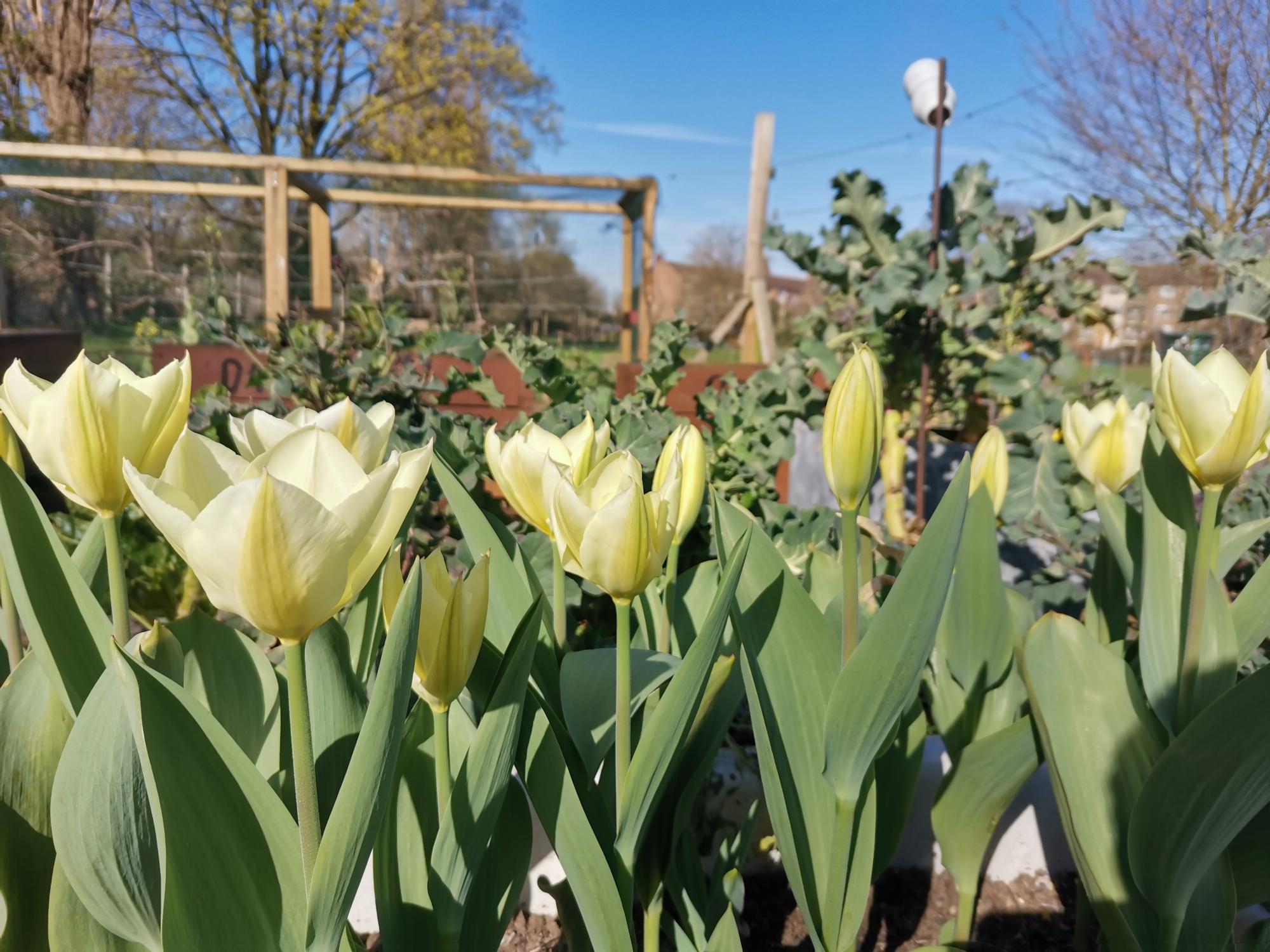
Spring bulbs are another great source of flowers – simply grow some extra daffodils, tulips or alliums and cut some to bring indoors. Cut the flowers whilst they’re in bud, so that they last longer, and make sure you leave the leaves on the plant if you want them to flower again next year, as they provide vital food for the bulb. If you leave your alliums to flower in garden, the dried heads at the end of the season will last for months, and make a lovely indoor display. The same is true for other sculptural flowers or seed heads that dry on the plant – lavender, or teasels, for example.
It is possible to grow flowers specifically for cutting. You might add some into your existing borders, or even create a ‘cutting garden’. When thinking about where to plant, it’s best to choose a sunny location – most plants need at least 6 hours sunlight a day to bloom to their full potential. A sheltered spot is best to prevent wind damage. You will also want to consider seasonality – having plants that bloom throughout the year will ensure you always have something to cut and bring indoors. Choose plants where cutting flowers encourages new ones, rather than plants which only bloom once during the season. It’s good to focus on perennials, which will come back year on year.
Certain plants are particularly good for cutting gardens. Peonies are a long-lived and hardy perennial that produce spectacular flowers. Dahlias are also impressive, and work well because the more you cut, the more flowers are produced. Achillea is easy to grow and produces an abundance of flowers, and for scent, you could try sweet peas or phlox. It’s worth noting that sourcing plants that are grown in peat-free soil, or seeds that are open-pollinated, will help ensure your cut flowers are as environmentally friendly as possible.
In order to keep your plants healthy, cut the flowers just above a node, so they can produce another branch or bud afterwards. Use a clean pair of secateurs, and make a clean cut. You’ll also want to cut a stem that is as long as possible – never cut halfway up a stem, which can cause die-back. A long stem also makes it easier to display the flowers indoors. It’s best to cut flowers early in the morning, before temperatures rise, and place them in water straight away.
Growing your own cut flowers allows you to experiment – there are many varieties you can try that are not commonly available in a florist or supermarket. Just like growing your own fruit and veg, it can be immensely satisfying – it is always nice to have something home grown!
Previous blogs:
How can I enhance biodiversity in a small urban garden?
This is how gardening can help your wellbeing
How Can I Garden Without a Garden?
What is permaculture, and how can I apply it in my own garden?
How to Plant a Pollinator-Friendly Garden