

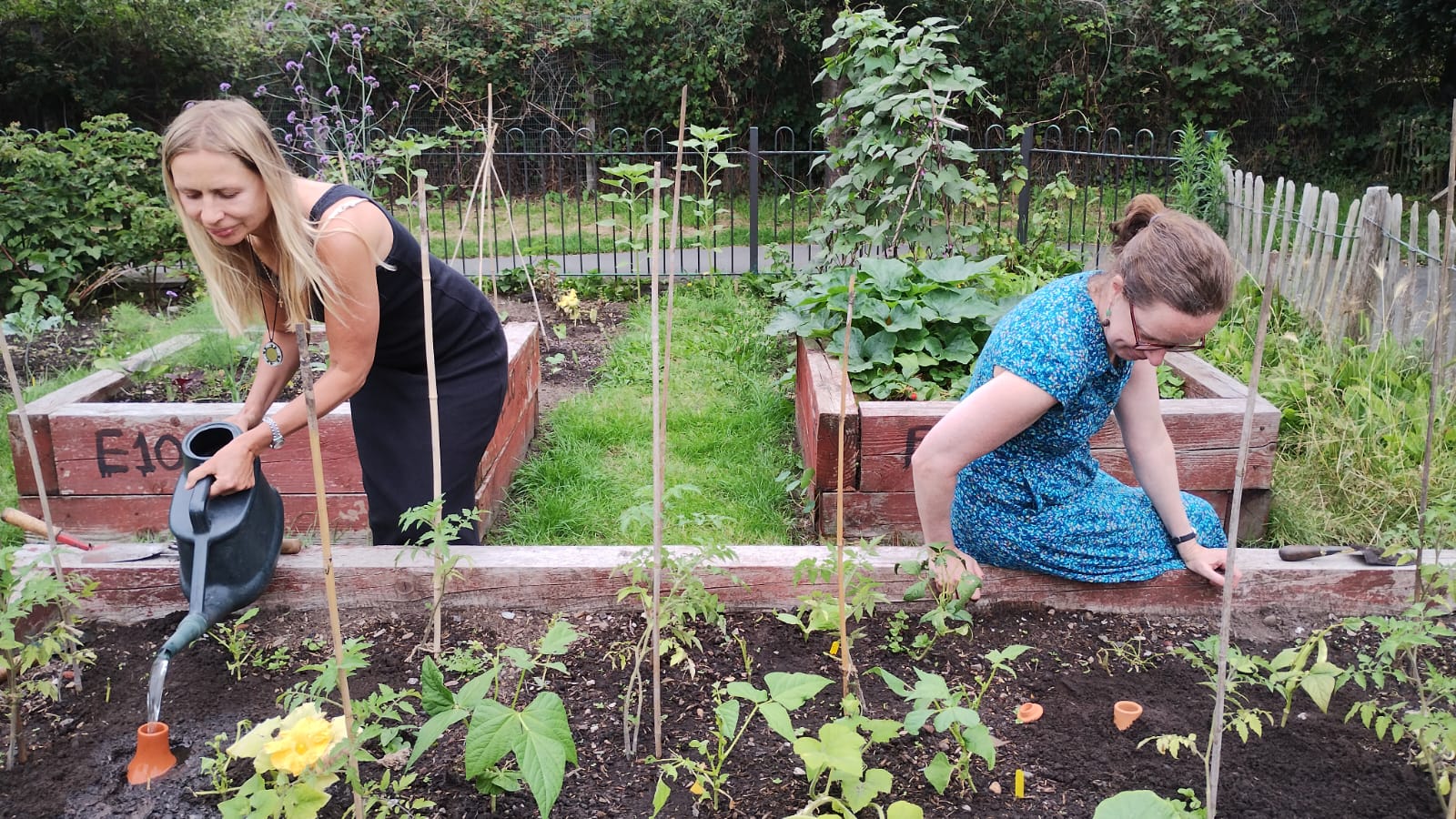
Barnes Common frequently receives enquires from people who want to make their gardens more sustainable, and here, we respond to some of these queries. If you have a question you would like us to feature – whether related to food growing or sustainable gardening in general – please contact Nicky. If you have tried these ideas at home, let us know how it goes!
At the risk of stating the obvious, it’s extremely hot right now! This sunny, dry period has been a real challenge for gardeners everywhere, as plants wilt dramatically and soil dries out faster than you can say ‘heatwave’. We all know we need to water – but how often, and how much? And with the prospect of long, hot summers ahead of us, how do we make our gardens more water resilient?
The first thing to note is not all plants have the same watering needs. Seedlings are the most susceptible to over-watering or under-watering; water from below, keep the compost moist but not soggy, and don’t allow them to stand in water. Anything that’s newly planted will also be reliant on you for regular watering whilst the root system establishes. Annual plants (and this includes almost all of the vegetables we grow) are thirsty and require lots of water, whereas shrubs and trees that have been in the ground for years should be largely self-sufficient. Plants in containers need particular attention, as they dry out quickly and can’t spread their roots to seek moisture.
How you water is also important. Plants take up water through their roots, rather than their leaves. Watering the soil around the base of the plant is a lot more efficient than watering from above. It’s also important to water all of the bed, rather than just directly around the plant – this encourages the plant to stretch its roots out in search of moisture, establishing a stronger and more extensive root system.
Taking the time to water deeply is a lot more effective than little and often. In this weather, lots of surface water is lost to evaporation, so a brief spray with the hose won’t do much. Equally, if you upend a bucket of water onto the flower bed most of it will run off; a rose or spray gun that soaks the soil gradually is much better. Try to visualise how deep the plants roots might be – you want the water to soak down to the roots, rather than just penetrate the surface of the soil. If you’re unsure, water for a few minutes and then stick your finger in the soil – how far down has the water reached? You might be surprised at how dry the soil is, even when you feel like you’ve been standing there for ages.
When you water makes a difference. Watering in the morning or the evening, rather than in the midday sun, means the water evaporates more slowly. Many gardeners prefer the morning, as watering in the evening can encourage slugs.
There are a few things you can do to ensure your soil is as moisture-retentive as possible. Mulching (with compost, leaf mould, wood chip etc) will slow evaporation and allow moisture to soak through the soil. Planting densely has the same effect. With both of these methods, what you’re trying to avoid is bare soil; having large bare patches increases water loss and causes erosion. Consider leaving low-growing weeds if they’re not interfering with your plants, because having soil covered is always preferable. It’s also worth considering planting combinations with varying heights – planting lettuce beneath corn, for example, can increase ground cover and create shade.
It can be helpful to understand what type of soil you have – clay tends to hold on to water, whereas sandy soils dry out very quickly. Whatever your soil type, moisture retention can be improved by adding organic matter, whether that be leaf mould, straw or compost. Organic matter doesn’t need to be dug in; it is enough to put a layer on the surface and allow soil life to incorporate it naturally.
Finally, now that a hose-pipe ban has been introduced, how else can you water your plants? Installing water butts or similar is a great way to reduce your reliance on mains water and captures rainfall when we’re busy complaining that there’s far too much of it! If your water butt ran dry weeks ago, you could consider capturing grey water – the water from your shower or washing up that’s only been used once. Avoid water that might contain particularly toxic chemicals, but a bit of dishwater won’t certainly harm your garden.
Have you found any particularly creative watering solutions? Contact us and tell us about them!
Previous blogs:
What’s Wrong with My Compost Heap?
How Do I Start a Vegetable Patch?
How to tell what would grow well in my garden?
How can I source my plants ethically?
How do I grow my own cut flowers?
How can I enhance biodiversity in a small urban garden?
This is how gardening can help your wellbeing
How Can I Garden Without a Garden?
What is permaculture, and how can I apply it in my own garden?
How to Plant a Pollinator-Friendly Garden