

Barnes Common frequently receives enquires from people who want to make their gardens more sustainable, and here, we respond to some of these queries. If you have a question you would like us to feature – whether related to food growing or sustainable gardening in general – please contact Nicky. If you have tried these ideas at home, let us know how it goes!
In both horticulture and conservation, we are encouraged to plant native species. There are many benefits; native flora has co-evolved with native fauna, and so helps to support wildlife and increase biodiversity. Native plants are adapted to cope with local conditions, be that soil, climate or prevalent pests and diseases, so often require less input from us. Many native species are at risk, and planting them can help preserve them. In a nature reserve like Barnes Common, conservation work will often focus on carefully protecting native species.
However, in a garden, or a food growing space, the majority of species are likely to be non-native. So, are native species are always ‘better’? And do non-natives do have a role to play in a sustainable garden ecosystem?
It is helpful to start with how exactly we define a native species. A plant is described as native if it arrived in Britain without the assistance of humans after the end of the last glaciation. However, some plants introduced to Britain before Medieval times are also considered native. This includes plants like cornflowers, poppies and apples – all ubiquitous with the idea of an ‘English country garden’. In reality, there are very few plants that are truly endemic.
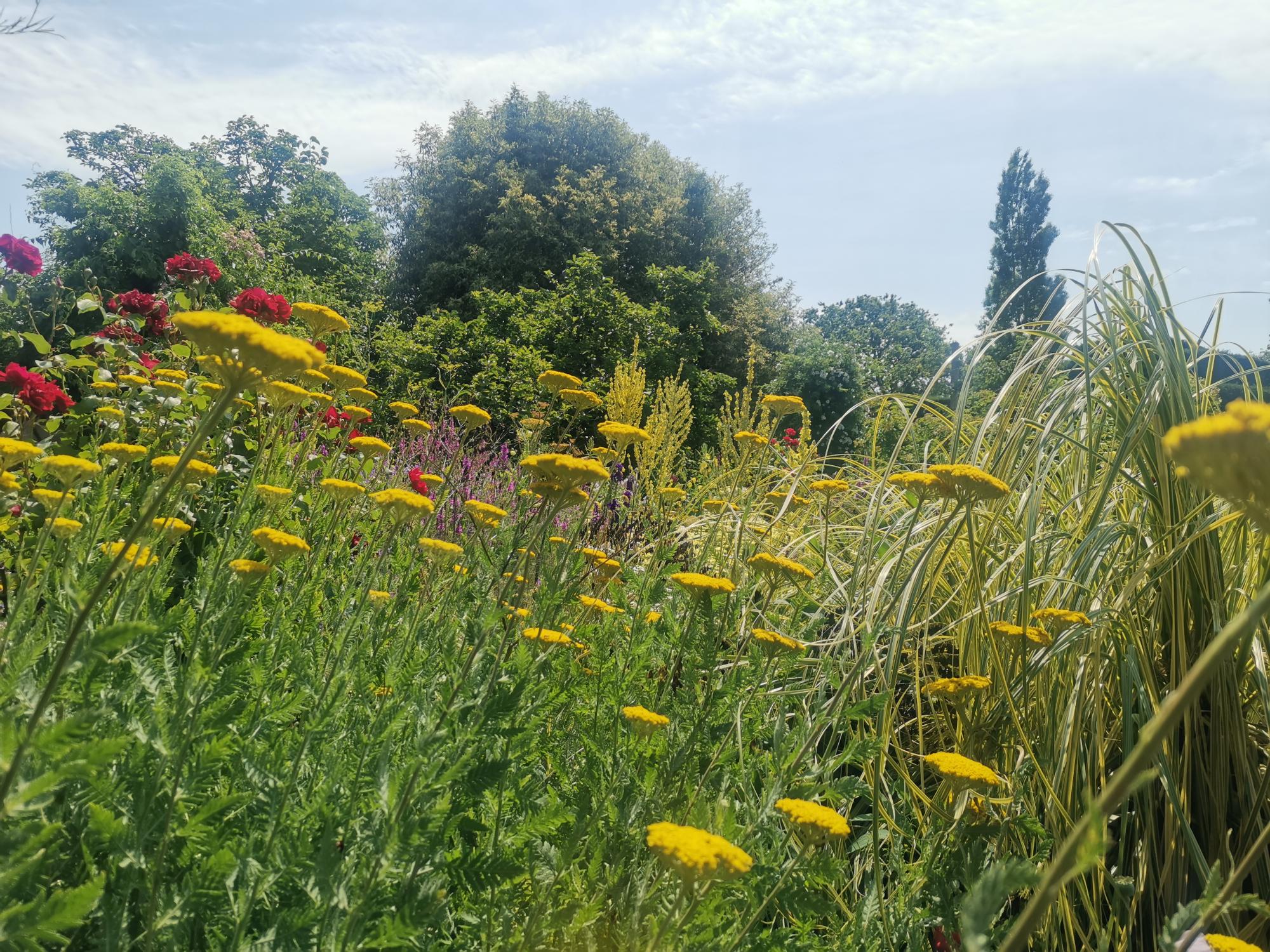
A 4-year study conducted at RHS Wisley aimed to assess whether ‘nativeness’ affected the abundance and diversity of bugs. Thirty-six trial beds were set up, with plants that were UK native, non-native from the Northern Hemisphere and non-native from the Southern Hemisphere. The results presented a nuanced picture; for example, pollinators were supported by both natives and non-natives from the Northern Hemisphere, and ‘exotics’ from the Southern Hemisphere were useful for extending the flowering season. Regardless of plant origin, it was concluded that the more flowers a garden contains, the greater diversity of pollinators it will support. This relates to gardens specifically rather than managed semi-natural habitats where natives might take precedence.
There is another reason why we might choose to plant non-natives. Almost every vegetable we grow in the UK is non-native; indeed, there are no native vegetables in the growing project. Growing our own veg has a myriad of benefits, including reducing our carbon footprint by helping us avoid food that has been flown long-distances and farmed very intensively. This is particularly the case with ‘exotic’ veg; you’ll never find an aubergine in Tesco that was grown in the UK. In the context of food growing, therefore, non-natives are essential.
Non-native plants have often been characterised as ‘invasive’ or ‘alien’ with concerns raised that they are contributing to the decline in native wildflower species. There are a very small number of genuinely concerning plants, such as Japanese Knotweed, but this article from Kew Gardens explains that the concerns around ‘alien’ plants have been “exaggerated or misplaced”. In fact, only 7% of non-native plants in the UK are considered to have a negative impact, and it’s worth noting that there are many native species that grow vigorously that can pose similar issues.
Research by the RHS has indicated that the average UK garden is, on average, composed of just 30% native species. It is perhaps a relief, then, to find that non-native plants have a valuable role to play in our growing spaces!
Previous blogs:
How to make your garden more water resilient
What’s Wrong with My Compost Heap?
How Do I Start a Vegetable Patch?
How to tell what would grow well in my garden?
How can I source my plants ethically?
How do I grow my own cut flowers?
How can I enhance biodiversity in a small urban garden?
This is how gardening can help your wellbeing
How Can I Garden Without a Garden?
What is permaculture, and how can I apply it in my own garden?
How to Plant a Pollinator-Friendly Garden