

Barnes Common frequently receives enquires from people who want to make their gardens more sustainable, and here, we respond to some of these queries. If you have a question you would like us to feature – whether related to food growing or sustainable gardening in general – please contact Nicky. If you have tried these ideas at home, let us know how it goes!
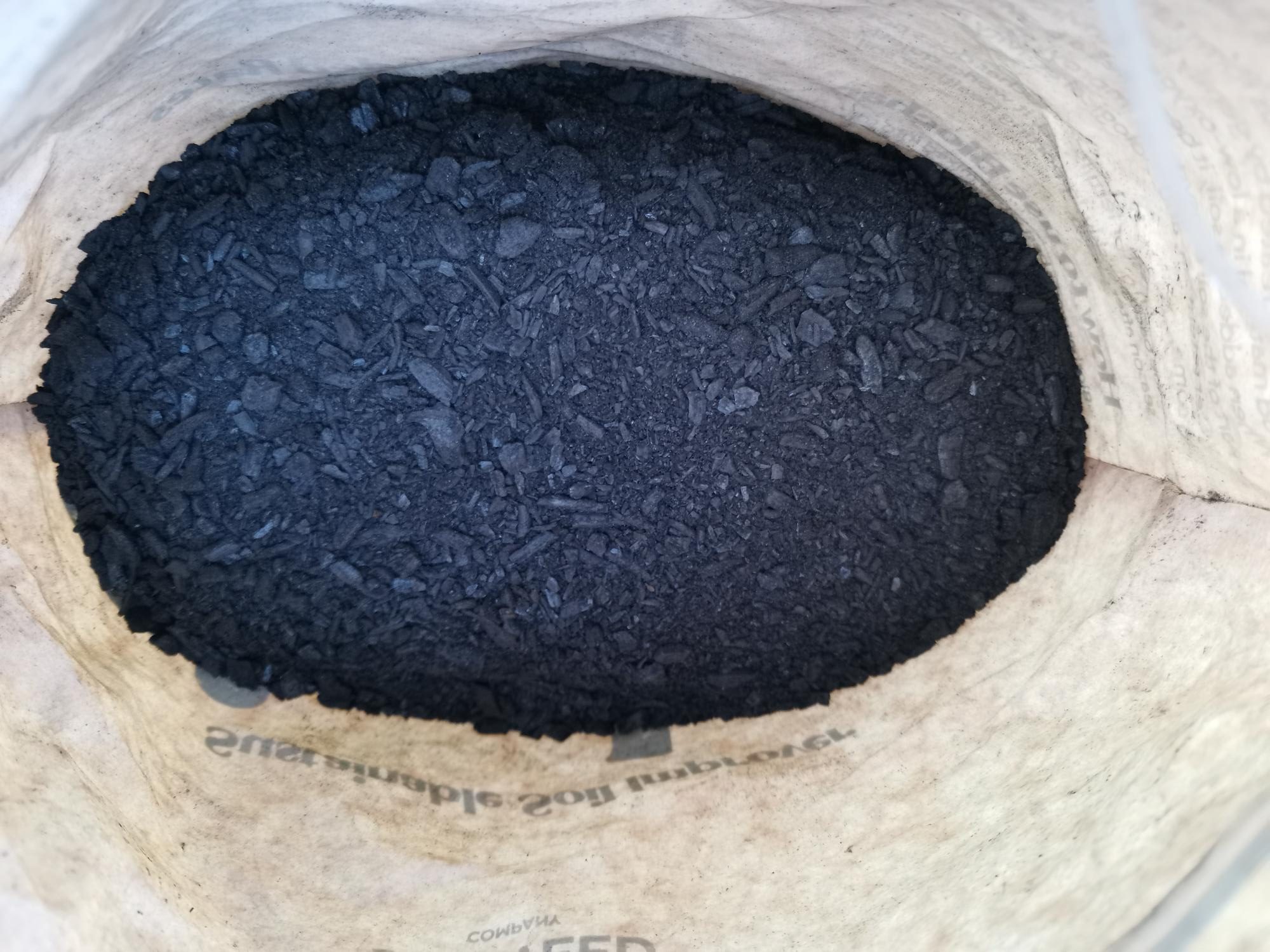
Earlier this year, the growing project won the Shropshire Seaweed Company’s Community Garden Award. We were sent a bundle of goodies, including a bag of biochar. So, what is biochar, and how can it be used in the garden?
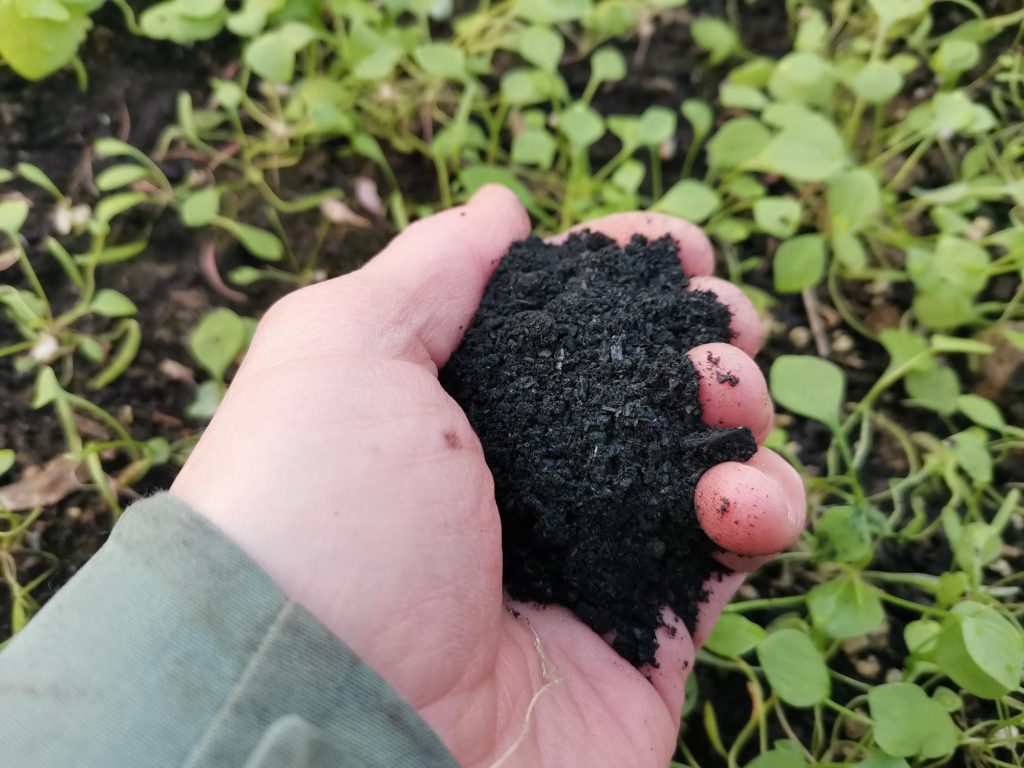
Biochar is organic matter that has been heated at very high temperatures in anaerobic conditions. This process is called pyrolysis and removes the molecules that contain hydrogen and oxygen, leaving behind the carbon-rich, skeletal remains of the original material. The end-product looks a bit like charcoal. Biochar can be made from a range of organic matter – from woody materials to soft plant matter – with the original material determining the properties of the end product. It has an open structure with lots of pores running through it, and when added to the soil, the pores function as conduits for air, water, nutrition and biology.
The idea of using biochar in gardens came from observing the ‘Terra Preta’ soils of the Amazon, where inhabitants had improved the low-fertility soils through the addition of charred organic material. Biochar is not a fertiliser in itself, but when dug through compacted or poorly structured soil, it can improve the structure and the transfer of water, air and nutrients. Biochar doesn’t readily decompose, so one application is enough to sustain these benefits for many years – possibly hundreds.
Biochar has benefits beyond the garden. The stable carbon in biochar can be stored for centuries, making it an important tool in carbon sequestration. Improving soil structure can help to reduce the emission of greenhouse gases such as carbon dioxide and methane. It has a variety of applications, from improving soil structure for afforestation schemes to being integrated into construction materials like concrete to improve durability and carbon storage.
All of these benefits might make you want to rush out of the door and buy some biochar for your own garden. However, a few words of caution. The properties of the biochar will depend on the original material it was made from. Some biochars have a high pH and so may not be suitable depending on what you are growing. Where you apply the biochar is also important; it has far greater benefits in poorly structured soil than in soil that is already fertile and well-structured. It’s also important to note that most studies on biochar relate to specific products, and the body of evidence as to its positive effects is still growing. Some studies have suggested that application may cause a temporary lock-up of nitrogen in the soil – this usually happens when nitrogen is already low.
It is also important to ensure that the origins of your biochar are sustainable (e.g., FSC certified) otherwise any benefits to the climate are negated. Biochar is most sustainable when it is produced under carefully-controlled conditions from waste materials – criticisms have been made of producers cutting down trees specifically for the production of biochar. If the process of pyrolysis is not managed properly, harmful greenhouse gases can be produced.
Overall, then, biochar can be hugely beneficial, but it is something to use in specific situations rather than as a catch-all soil improver. It is also important to ensure that the product you use is sustainable and ethically sourced. We’ll be trying out our biochar this coming growing season, and we’ll report back on the results. If you’ve ever used biochar at home, let us know your thoughts!
Previous blogs:
Are native species always better for the garden?
How to make your garden more water resilient
What’s Wrong with My Compost Heap?
How Do I Start a Vegetable Patch?
How to tell what would grow well in my garden?
How can I source my plants ethically?
How do I grow my own cut flowers?
How can I enhance biodiversity in a small urban garden?
This is how gardening can help your wellbeing
How Can I Garden Without a Garden?
What is permaculture, and how can I apply it in my own garden?
How to Plant a Pollinator-Friendly Garden